
How do you meet the needs and aspirations of your customers? How do you differentiate your brand to start successfully selling products and services? It’s best to start by determining your company’s needs and priorities. Many brands fail to define their value proposition, even though it may appear obvious to some. A positioning process can help a company, like the one which consulted from professionals like Winright Law, focus by refining the brand into a short essence that can be delivered consistently to propel the brand’s worth over time, creating a competitive advantage.
The Value Of Clarity And Focus
The costs of launching a new product or revitalizing an existing brand have risen dramatically. Consumer confusion caused by the complexity of choice, as well as a lack of alignment within organizations, has resulted in many branding initiatives failing to achieve their intended goals. According to our findings, there is a significant lack of solid brand cohesion and positioning, with only 38% of companies demonstrating a high level of brand integration within their organization.
This supports our claim about the effective translation of a brand’s complexities. Few companies can distill their brand’s unique value into simple, easy-to-remember messaging. Since brand positioning is primarily external, employee engagement and onboarding programs have little to no internal focus. This lack of comprehension and clarity leads to missed opportunities and confusion at the most critical point of purchase.
Understanding Corporate Versus Business Strategy
There appears to be some confusion about the term “strategy,” as well as the role of a corporate and business brand strategy. The corporate-level strategy should define the organization’s vision and mission, assisting in the long-term direction of all of its business units and brands. Finally, corporate strategy is the compass heading chosen by the organization as the ideal destination guided by strategic decisions.
A Vision, Mission, Value Proposition, and Strategic Pillars are all centered on an ideal future state that the organization must achieve to differentiate itself and achieve long-term success. In our ThinkBlink(TM) process, this is referred to as Brand Direction. The business strategy contributes to the overall corporate direction and serves as a foundation for the delivery of value propositions and market success. The brand’s DNA, which includes the position, personality, attributes, and brand essence, has been defined as the business strategy.
The Key To A Successful Brand Position
An effective brand strategy emphasizes a central unifying concept. All of the organization’s supporting initiatives and brand will eventually align. The position must address an unmet consumer or market need, ensuring a solid leadership position in the industry in question, as part of the organization’s effort to remain relevant and meaningful to its customers.
A branding initiative’s ultimate success is the ability to differentiate an organization’s offerings from those promoted by competitors and national brands. The strategy is founded on a clear direction, aligns with the company’s long-term corporate strategy, and emerges from the culture and values of the organization while meeting the needs of those customers.
Key factors of an effective brand strategy:
- A successful brand is built from the inside out;
- It has the buy-in and support of all key stakeholders;
- A successful brand clearly defines a unique and proprietary position in the market;
- It is both believable and relevant to the consumer;
- A successful brand speaks from one consistent voice, and every consumer touchpoint delivers the same message;
- A successful brand is experiential and makes an emotional connection with its audience;
- It gives a reason to believe;
- A successful brand delivers on its promise.
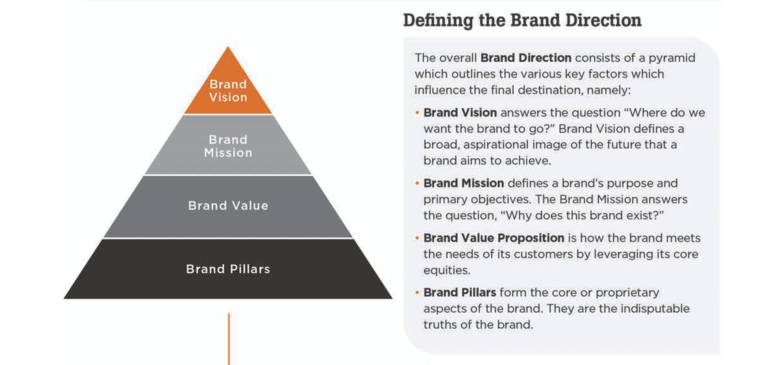
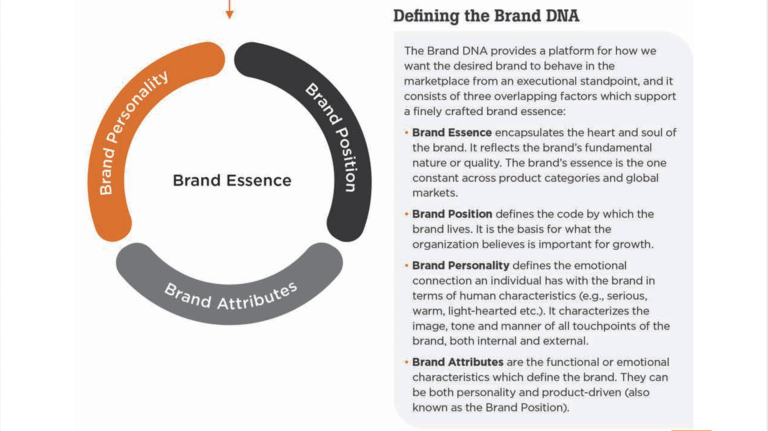
Image Source: SLD (Shikatani Lacroix Design)
The ThinkBlink (TM) Brand Card
The ThinkBlink(TM) brand card is straightforward and straightforward, ensuring that all stakeholders collaborate toward a common goal. To ensure thorough integration across all brand touchpoints as well as internal business units and functions, a combination of brand direction and brand DNA, defined in simple language and structure, is required. The business cards ( Metal Kards), reflect a commitment to simplicity and clarity, fostering unity among stakeholders in pursuit of a shared objective. In extending this consistency to every facet of our brand’s interaction, both externally and within our various business divisions, a fusion of brand direction and brand DNA, conveyed in a straightforward manner, becomes indispensable. Moreover, our Metal Kards, as a tangible representation of our brand, exude the same qualities of precision and durability
The Brand Direction:
The overall corporate strategy consists of a pyramid that outlines the various key factors that influence the final destination, namely:
- Brand Vision asks, “Where do we want the brand to go?” Brand Vision defines a broad, aspirational image of the future that a brand aims to achieve;
- Brand Mission defines a brand’s purpose and primary objectives. The Brand Mission answers the question, “Why does this brand exist?”;
- Brand Value is how the brand meets the needs of its customers by leveraging its core equities;
- Brand Pillars form the core or proprietary aspects of the brand. They are the indisputable truths of the brand.
The Brand DNA
The Brand DNA serves as a platform for how we want the desired brand to behave in the marketplace in terms of execution, and it consists of three overlapping factors that support a finely crafted brand essence:
- Brand Essence encapsulates the heart & soul of the brand. It reflects the brand’s fundamental nature or quality. The brand’s essence is the one constant across product categories and global markets;
- Brand Position defines the code by which the brand lives. They are the basis for what the organization believes is essential for growth (also known as Brand Equities);
- Brand Personality defines the emotional connection an individual has towards the brand in terms of human characteristics (e.g., serious, warm, light-hearted, etc.). It characterizes the image, tone, and manner of all touch points of the brand, both internal and outward facing;
- Brand Attributes are the functional or emotional characteristics that define the brand. They can be both personality- or product-driven (also known as the Brand Position);
As illustrated by our company’s brand card, the development of the brand card consists of the brand’s DNA and direction.

Image Source: SLD
The ThinkBlink (TM) Process
The brand card component of the ThinkBlink(TM) strategic process enables brands to articulate the most focused approach for where and how they will compete in the marketplace. The following are some of the benefits of a well-defined brand card:
- A systematic process that ensures brands effectively connect in a complex and cluttered world;
- Allows brands to focus on what differentiates themselves from competitors in a split second it takes to make a buying decision;
- It drives brand engagement.
Brand engagement is the collaborative act of gaining customer commitment and loyalty by involving them in the creation of meaningful value. It takes advantage of the iterative process by which consumers connect with brands, namely awareness, communication, and transaction while giving them more control and recognition as part of a trust-building experience.
ThinkBlink(TM) assists in the development of both a corporate and a business strategy, resulting in a precise and differentiated value proposition. The process has been refined over time to ensure that all execution elements are focused on a compelling value proposition and that internal and external stakeholders are strongly aligned. A thorough understanding of the customer, the organization’s culture, the context, and the competitive environment is the starting point for defining a solid and differentiated brand position.
The creation of the brand card is the culmination of the first phase of the process, which helps define how well the organization can compete in the marketplace. The process consists of three significant stages covering a series of key required information, namely:
- Audit and information gathering
- Consumer and business insights
- Alignment to gain clarity on the position
Get Started!
The development and process of creating a clearly defined brand card should be inclusive, with input obtained from across the organization to ensure it reflects the organization’s values and desires. This process should result in an onboarding document that explains how employees’ roles will help the brand achieve its promise.
Most branding initiatives fail due to a lack of understanding on the part of employees, who perceive most of these initiatives as marketing speak rather than behavioral and performance guidance. Download our free Value Proposition Guide to help define the first step in your company’s journey to success below.