
The rapid evolution of artificial intelligence is weighing on the minds of professionals who may be affected, and this includes the design industry. Technology has helped advance the design industry considerably, by providing a wider range of design solutions and visualization tools for clients. Companies like Adobe and Apple have redefined the industry by providing solutions that are fast, cheap, and of high quality.
While AI has shown impressive capabilities in a variety of domains, it’s important to consider the complexities involved in completely replacing human designers. This blog examines the current landscape, analyzes AI’s strengths and weaknesses in design, and offers a nuanced perspective on AI’s future relationship with designers.
The Rapid Growth Of AI
AI has advanced rapidly, demonstrating exceptional abilities in tasks such as pattern recognition, data analysis, and creative generation. Human designers, on the other hand, are indispensable due to their unique qualities such as creativity, intuition, and empathy. However, there are scenarios in which AI could automate specific design tasks while identifying areas where human designers will continue to be required.
The real world is not a series of zeros and ones, and this technology lacks a key factor that distinguishes machines from humans: empathy and intuition. Design is a multifaceted discipline that necessitates imaginative thinking, empathy, and a thorough understanding of human emotions and behaviors. Human designers are capable of interpreting complex client briefs, taking into account subjective factors, and imbuing designs with meaning and purpose. These uniquely human characteristics contribute to the creation of innovative, user-centric designs that emotionally connect with people.
Human Creativity Remains Safe
While AI can currently automate specific design tasks, it cannot replicate the entire design process. AI has difficulty understanding context, being creative, and interpreting ambiguous or abstract concepts. Design frequently entails making subjective judgments and accepting the unpredictability of human emotions, which presents a challenge for AI algorithms.
Furthermore, ethical considerations and the need for social responsibility necessitate human intervention and judgment. We have identified the following key points to consider in terms of the design’s continued value:
- AI as a tool, not a replacement: AI should be viewed as a tool that augments and enhances the capabilities of designers, rather than as a complete replacement. AI algorithms are capable of automating repetitive tasks, generating design options, and providing data-driven insights. Designers can use AI to streamline workflows and make better decisions, but the creative and human-centered aspects of design are still best handled by humans.
- Creativity: Design is a creative process that necessitates originality, ideation, and a thorough understanding of human emotions and experiences. While AI can generate design variations based on predefined parameters, it does not possess the inherent creativity and intuition that human designers possess.
- Understanding the context: Design entails interpreting and responding to the specific context, cultural nuances, and user needs. Human designers excel at comprehending the subtle complexities of a project, taking into account subjective aspects, and tailoring designs to the intended audience. AI algorithms, on the other hand, may require assistance with contextual comprehension and grasping the nuances required to create meaningful and impactful designs.
- Emotional intelligence and empathy: Designers frequently strive to elicit emotions and create experiences that users can relate to. Human designers have emotional intelligence and empathy, which allows them to understand the psychological and emotional aspects of design. This empathy is critical in developing designs that connect with users on a deeper level, which AI cannot replicate.
- Ethical and social considerations: Design involves making ethical and responsible decisions, taking into account the impact on individuals, communities, and the environment. Human designers have moral reasoning and ethical judgment, which ensures that designs align with human values and respect diverse perspectives. AI may be unable to make nuanced ethical decisions without human intervention, potentially leading to unintended consequences or biases.
Certain Design Functions Will Be Disrupted
Although designers can be confident that AI will not replace our entire industry in the near future, they must embrace how this technology can be woven into and leveraged in how we approach our work. However, AI will have an impact on certain aspects of the design process, specifically in the following areas:
- Photo image manipulation and creation: Platforms such as DALLE 2, an AI system that can create realistic images and art from a natural language description, combining concepts, attributes, and styles, Jasper.ai, a tool for creating high-quality images that comprise both a primary and advanced text input to generate images, and Photosonic, a tool that can create both accurate and imaginative photos using a combination of latent diffusion maps and artificial intelligence, can solve one of the cost problems.
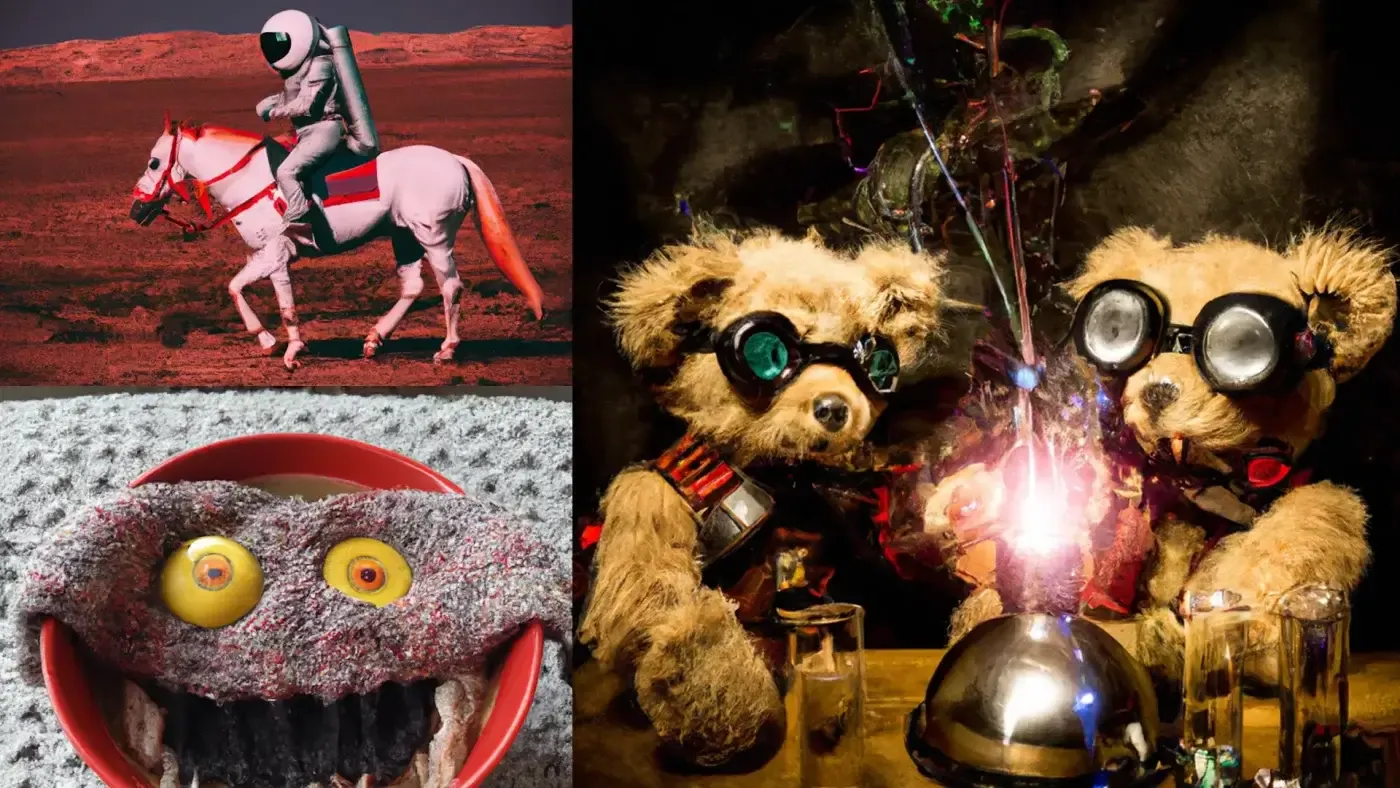
Image Source: Thred
- Design adaption to final artwork: Adobe and other design-related software providers have focused their AI platforms on the design adaptation and final artwork phases of design. Although still in their early stages, these platforms will reduce the number of stages and design hours required to translate the final approved design into final artwork applicable to various packaging formats and printing requirements.
- AI-generated lower-end design-sourced solutions: Canva and other platforms, such as Designhill.ai and Designmagic, offer a wide range of adequate solutions, from logos to marketing materials, for a segment of customers who cannot currently afford to hire a professional design firm. These platforms will commoditize the bottom end of the design industry, forcing designers to work for larger agencies with larger-scoped projects and clients.
- Naming and translation: Organizations can use ChatGPT and other AI platforms to brainstorm potential names, taglines, and translations. It enables quick exploration of a broader range of areas and ideas for seasoned naming professionals.
Embrace AI As An Emerging Design Tool
Rather than completely replacing designers, AI is more likely to augment their skills and transform the design process. Designers can use AI to increase efficiency, gain insights from data analysis, and automate repetitive tasks. AI and designers’ symbiotic relationship will result in a collaborative process in which AI generates ideas, explores design options, and provides data-driven recommendations. Designers, on the other hand, add a human touch and expertise.
They can leverage AI’s potential to enhance their work by embracing AI as a collaborative tool and continuing to hone their human-centric skills, resulting in a future where AI and human designers work in synergy to push the boundaries of creativity and innovation.
Designers’ distinct blend of creativity, intuition, empathy, contextual understanding, and ethical considerations is critical in the design process. We envision a collaborative relationship between AI and designers in the future, where it’s used to improve their work, resulting in more innovative and impactful designs. However, only time will tell who will be the ultimate master of creativity.