
Gentle Monster is a Korean eyewear retail brand. Since 2012, it has driven huge traffic, both online and offline, by filling its stores with elaborate art installations and only a handful of actual products. It could be giant human faces, spaceships, animal-shaped robots, or anything you can imagine. Its first store in Toronto opened in 2025.
This gallery-style concept was new at the time. Embedding installation art into a retail space did three things: It grabbed consumers' attention. It shaped the brand's uniqueness. And it drew people into the store. That method is now nearly 15 years old. Has this strategy changed?
That's when I noticed TANSANMAGNESIUM.
Enter TANSANMAGNESIUM
TANSAN (炭酸 / 탄산) means the bubbles in carbonated drinks. Combined with the English word "magnesium," it becomes "magnesium carbonate." In the sports world, this is the anti-slip white powder known as chalk. Rock climbers and weightlifters rub it on their hands to absorb sweat and increase friction.
Like Gentle Monster, TANSANMAGNESIUM is also a Korean fashion brand, but built around rock-climbing apparel. Founded in 2025, it has already opened two physical stores, with plans to enter the Japanese market soon. Its five-year target of CAD 100 million would put it in the same league as the Canadian brand Vessi.
The brand's founder said: "What I find regrettable is that rock climbing is still seen as a non-mainstream sport, not very accessible. I wanted to create a new culture by combining climbing with fashion, so that more people could naturally come into contact with climbing. That's why I founded this brand."
Let's talk about how TANSANMAGNESIUM weaves this original intent into its retail environment.
A Walk Through the Store
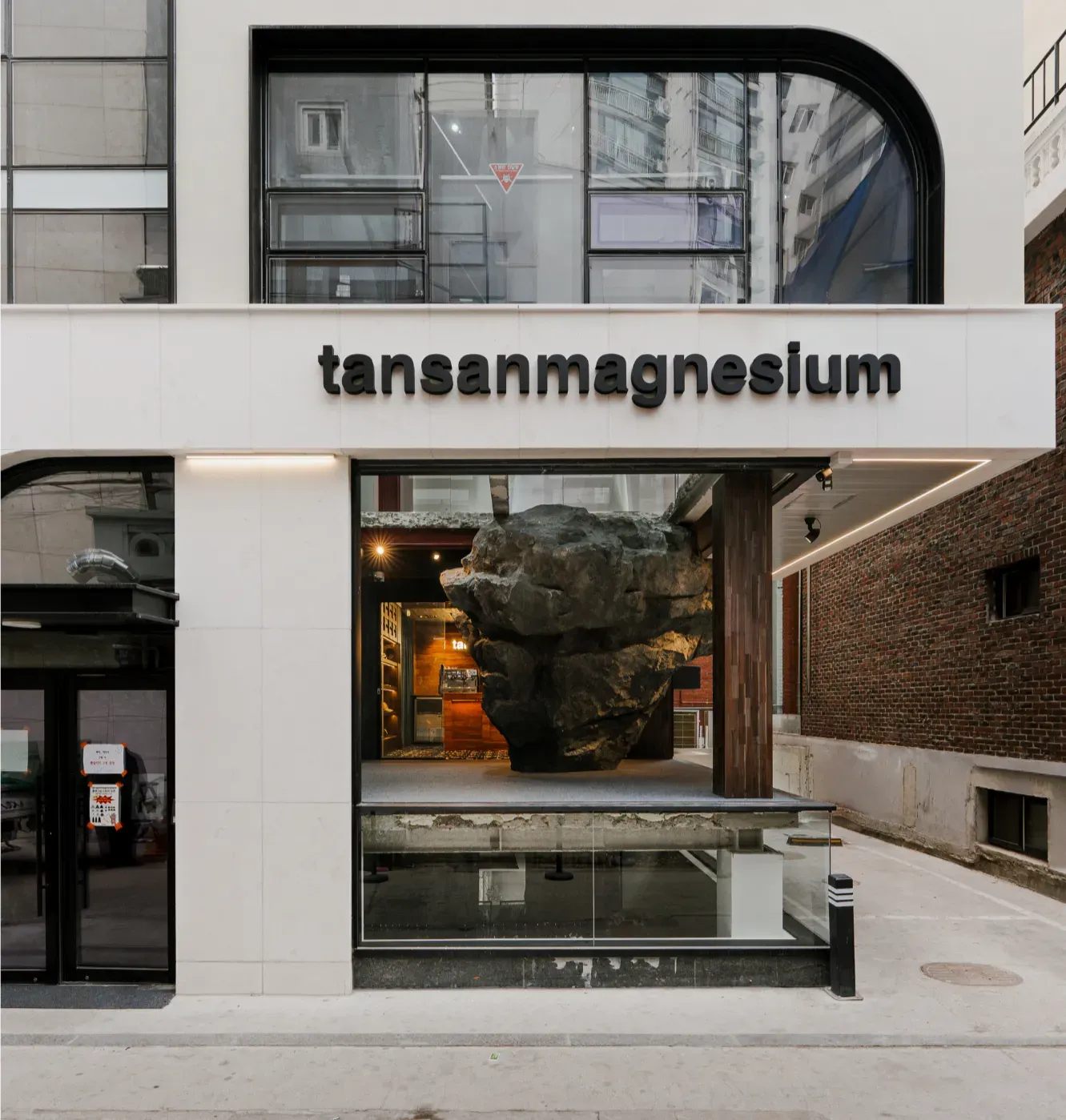
Image Source: superfuture
You're walking through a bustling neighborhood when a massive rock in a storefront stops you. The open space is inviting you in. Confused, then curious, you notice someone trying to climb it, or maybe you'd already seen the climb on social media, and that's what brought you here. Does anyone actually climb it? You have to see for yourself.
The first floor is a cafe. It has only a handful of products, so you can't quickly tell what kind of store this is. Your curiosity isn't satisfied. Even once you realize it's a store selling things, you still want to know one thing: what are they really selling?
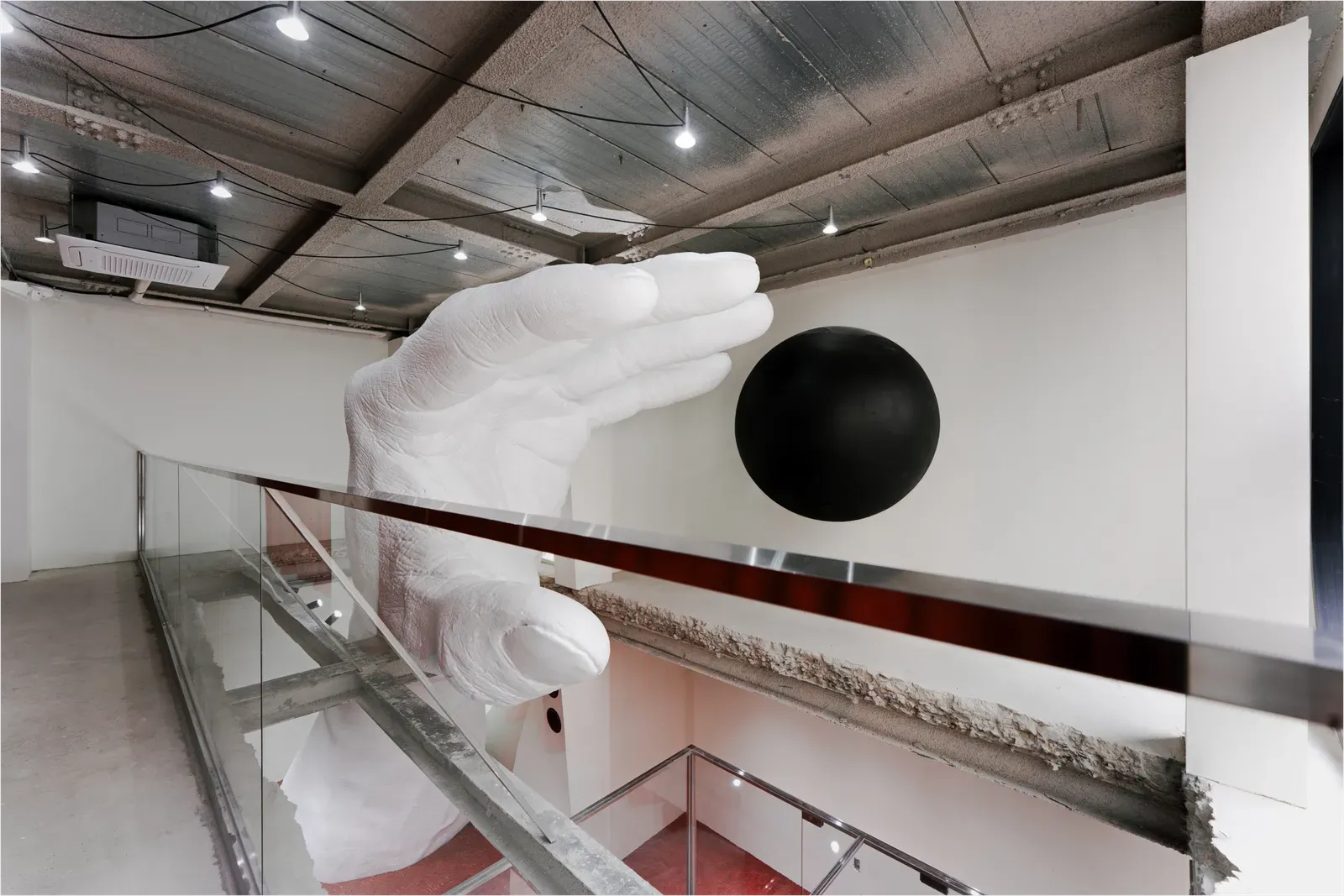
Image Source: superfuture
You climb up the stairs. On the second and third floors, a massive sculpture of a hand reaches for a ball. It creates a feeling of being just a little short. You're right on the verge of grasping it.
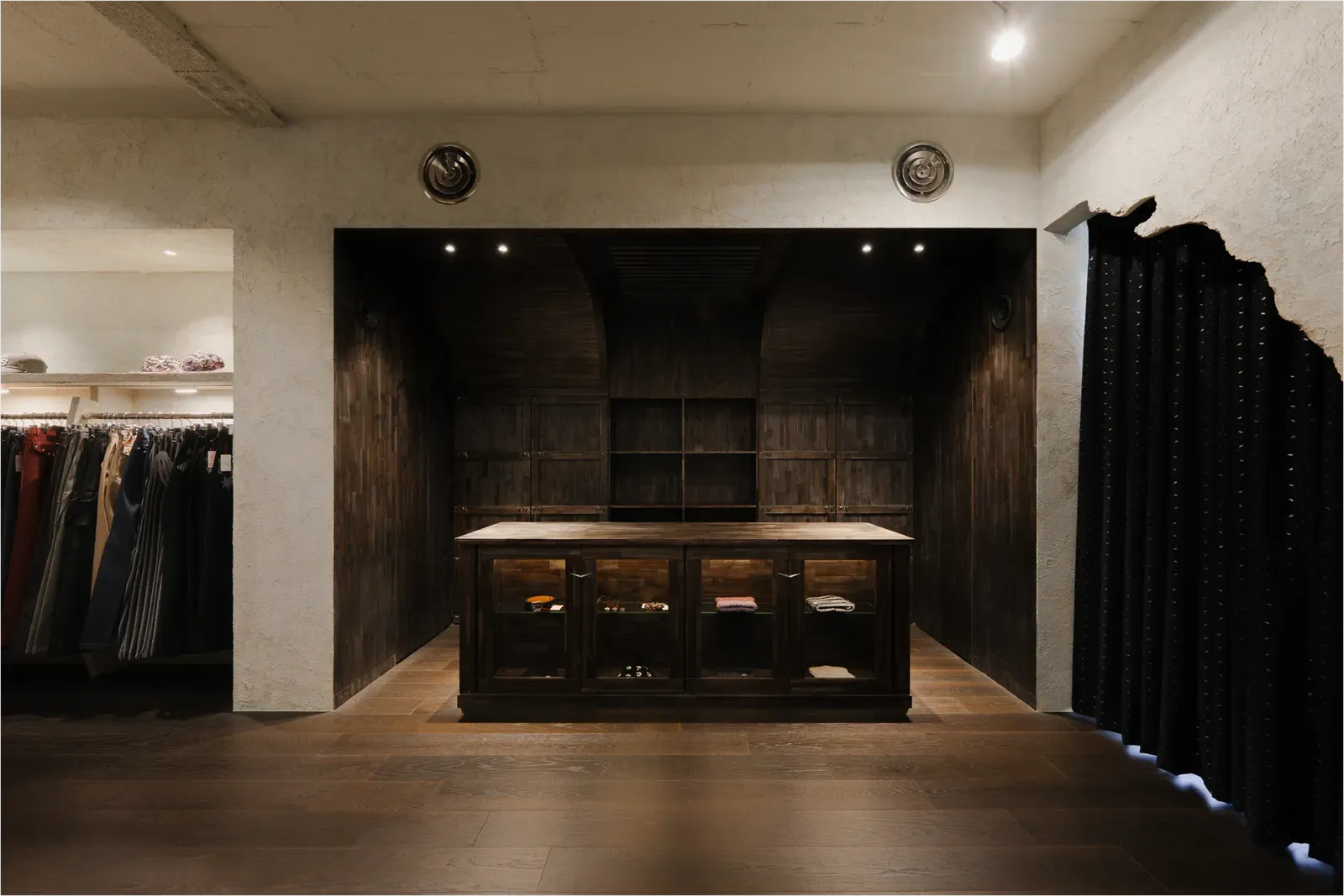
Image Source: superfuture
When you make it up to the fourth floor, it feels as if you've truly reached the summit. The products in front of you become the spoils of your climb. Along the way, you've already pulled out your phone countless times to post photos on social media. Those photos may well include the spoils you just bought.
Two Audience, One Store
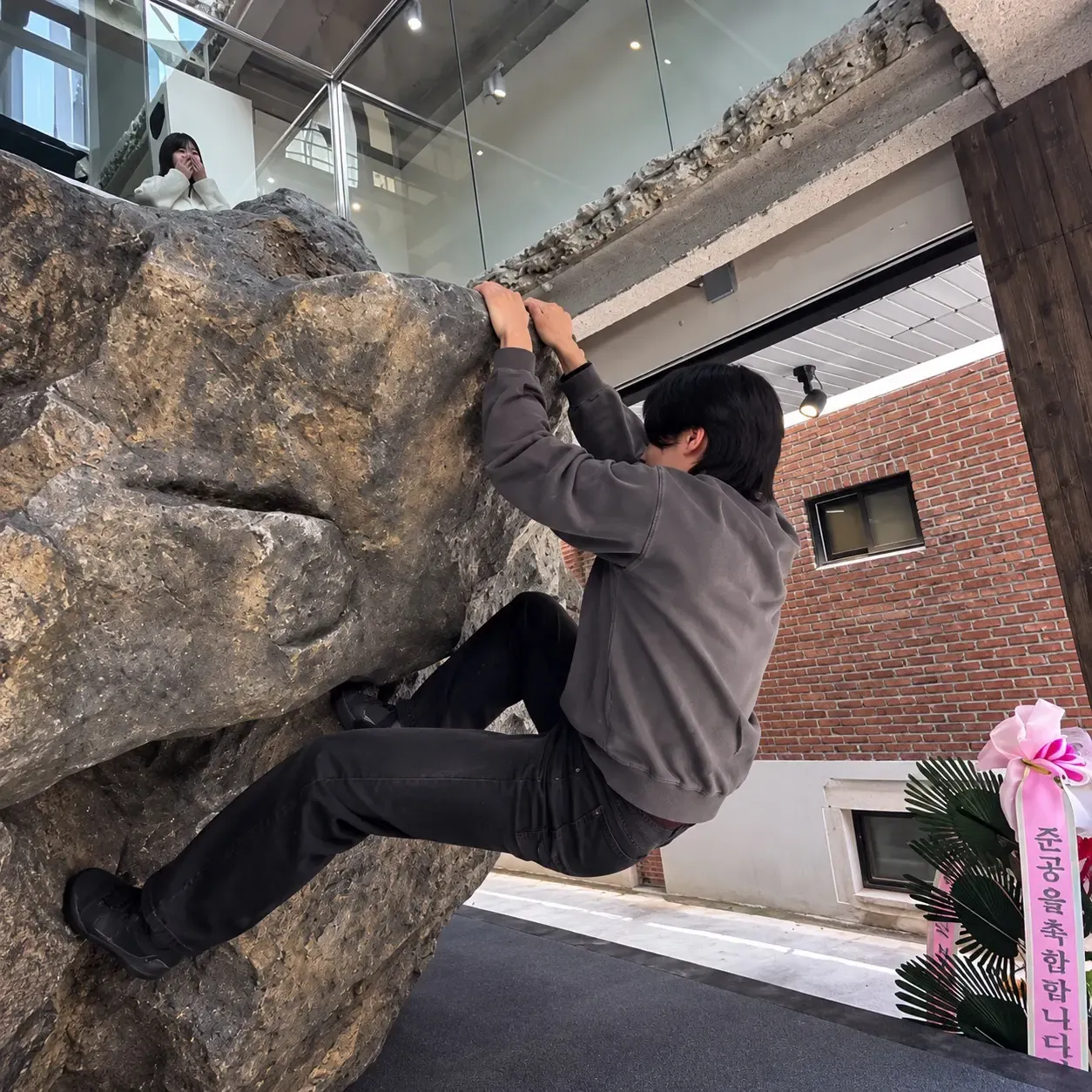
Image Source: Creapills
This path through the store works like a marketing funnel. Even if you don't buy anything, the brand still benefits from your visit. Your need to be seen and your desire to share bring the brand more attention. That attention brings more people through the door.
People who like or understand rock climbing meet people who don't, right here. The storefront becomes a space for exchanging views and feelings about "rock climbing." All sorts of topics open up as a result. The two groups can talk around one shared fact. Each group gets something different from it: one satisfies the need to be seen, the other the need to see. Those closer to climbing feel seen first. Those farther from it get pulled a little closer by the store itself.
For consumers with no climbing skill, knowledge, or experience, what's being sold is a brief taste of "climbing." Real climbing demands a real investment: energy, money, time. This store compresses that into a few feelings instead.
For consumers who love climbing, the offer is different. It's the recognition that comes from a niche community finally being seen, along with the pride that comes with it. That pride comes from watching the brand convey the sport's beauty directly to non-enthusiasts. At the same time, the brand's products strengthen a connection: the self inside the climbing gym, and the self outside it. This lets the "climber" identity fold more naturally into everyday life. It's much like Lululemon, where athletic clothing doubles as everyday wear. When a consumer uses this brand to express that identity, loyalty follows. They believe the brand represents who they are.
From Watching to Participating
Gentle Monster's approach is to move art installations into the retail space, so you enter the store to see the installation. This is, in essence, a passive, gallery-style curiosity: What is this? What does it have to do with the product?
TANSANMAGNESIUM's approach, by contrast, is an active, participatory curiosity: Can I do it? It has moved the spectacle from something you watch to something you perform.
The Real Question for Brands
This complex but carefully designed consumer journey relates to the second tenet of the ThinkBlink Manifesto: "Good design is strategy." It's about how to mobilize and strengthen the emotional connection between the brand and the consumer. Brands ultimately have to come back to a few core questions: What emotional connection do you want to build with your audience (your core audience and your broader audience)? How do you want to engage your consumer? And how do you make sure they bring the people around them into this emotion, too?