
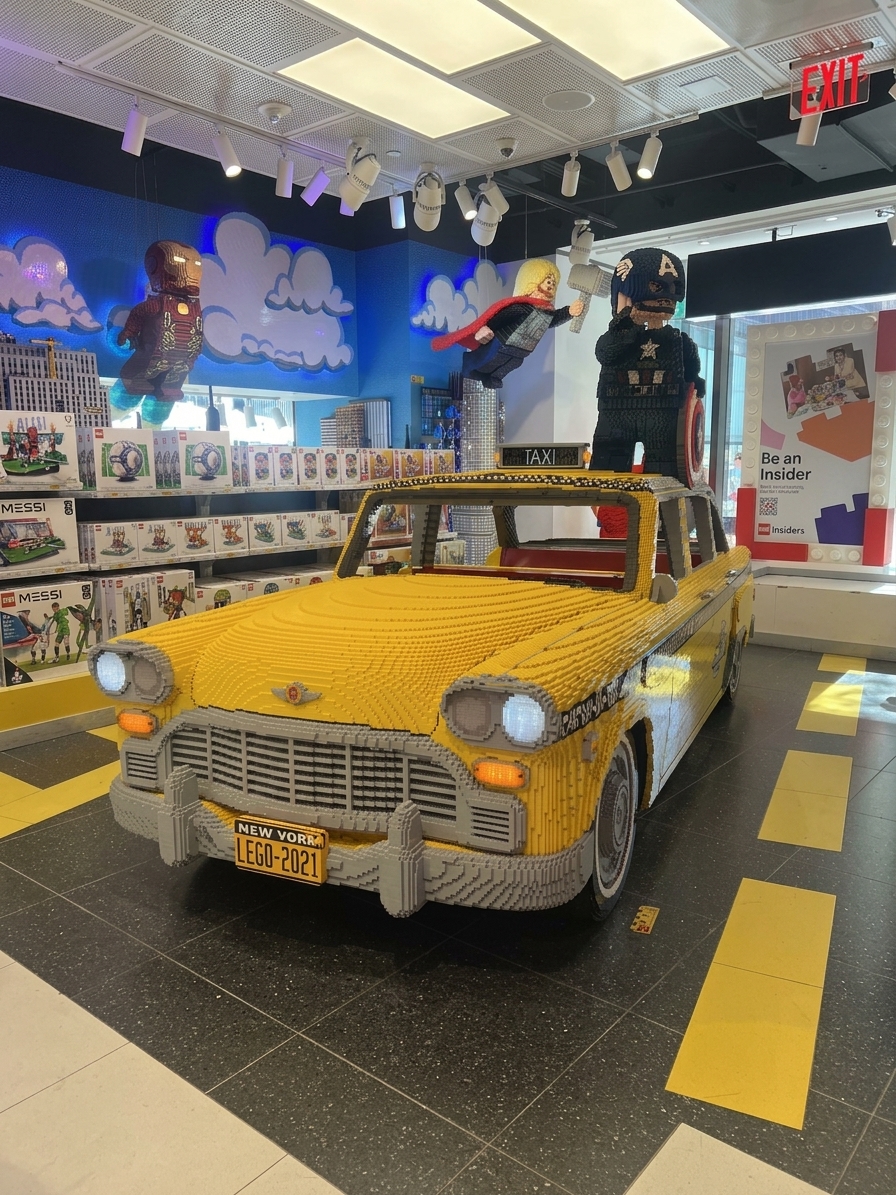
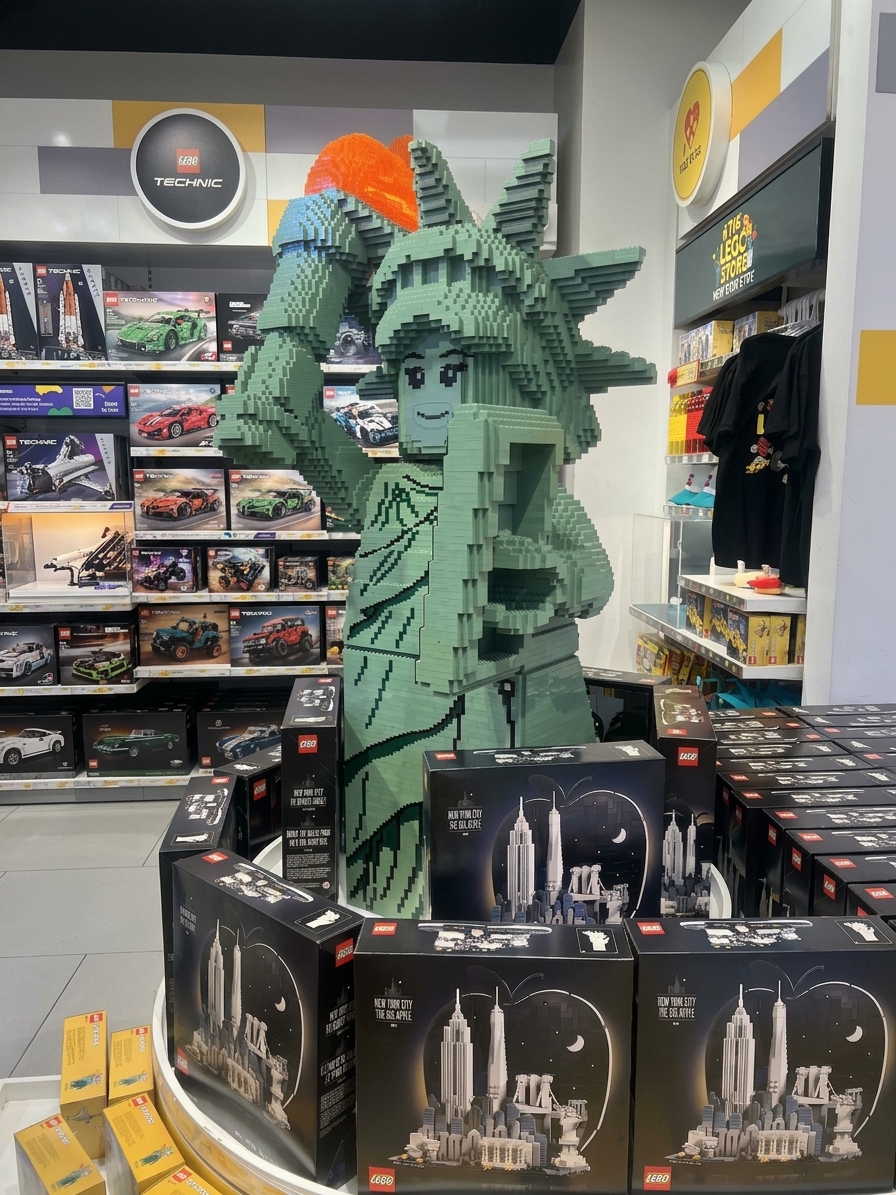
On one of the world’s most famous shopping streets, the LEGO Store Fifth Avenue proves that high-concept retail can still be a whole lot of fun. On a recent trip to NYC, I got to experience this firsthand. The flagship offers a brick-built tour of New York City, featuring replicas of the Statue of Liberty, the Empire State Building, One World Trade Center, and an NYC-style taxi you can actually sit inside. At every corner, the store demonstrates how LEGO can unlock infinite creativity. Like its interlocking bricks, the brand connects with fans across generations —a rare feat in today’s retail landscape.
How LEGO Masters the Art of Connection
Built on decades of nostalgia and play, LEGO creates an interactive space for real connection. Its branding holds onto the youthful spirit parents remember, while offering clever, elevated challenges for more advanced builders. This philosophy also shapes its store design, something I really saw reflected in how they treat the space. Instead of crowding shoppers into tight aisles, LEGO turns its retail space into an open-floor playground created for all ages.
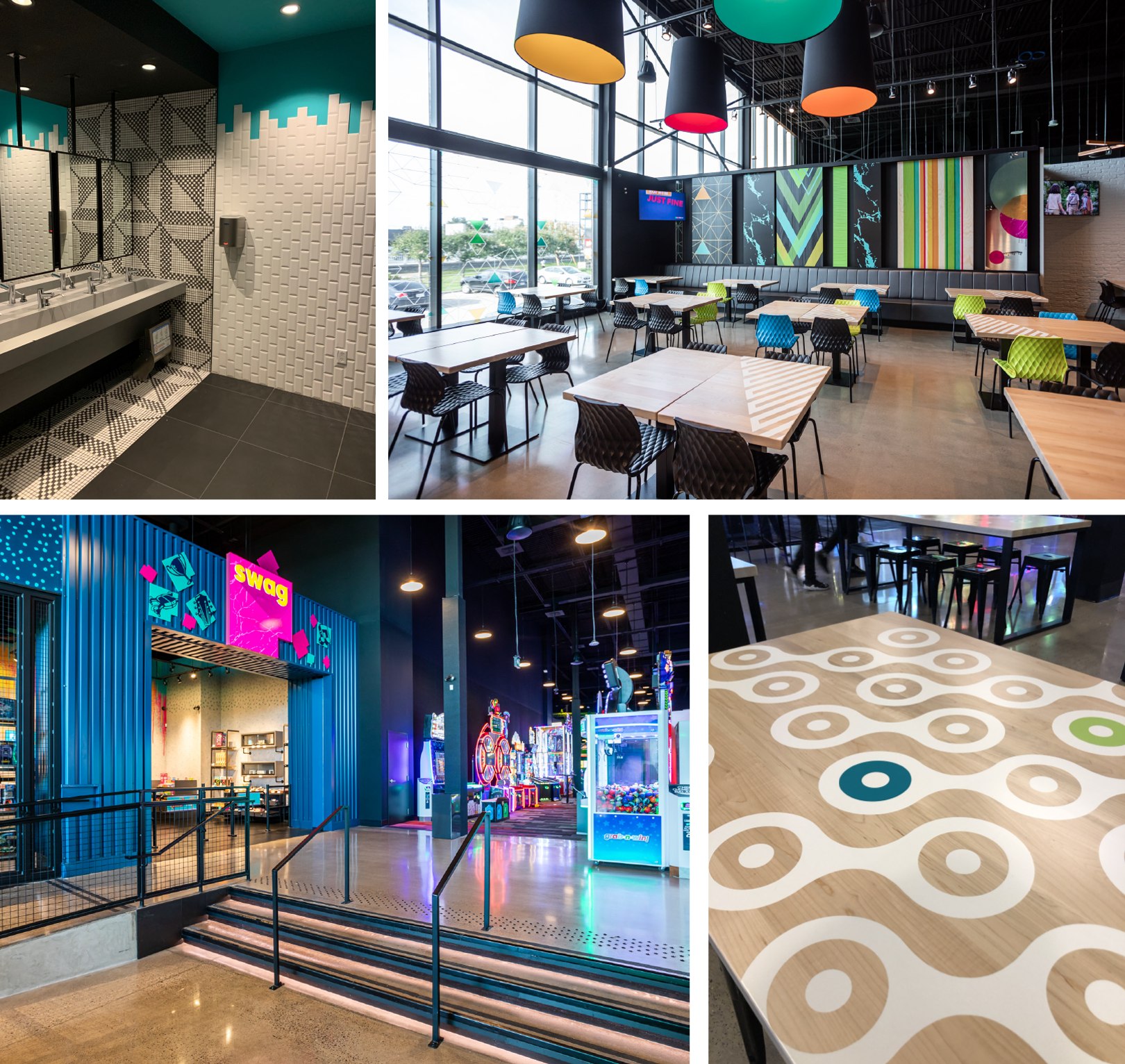
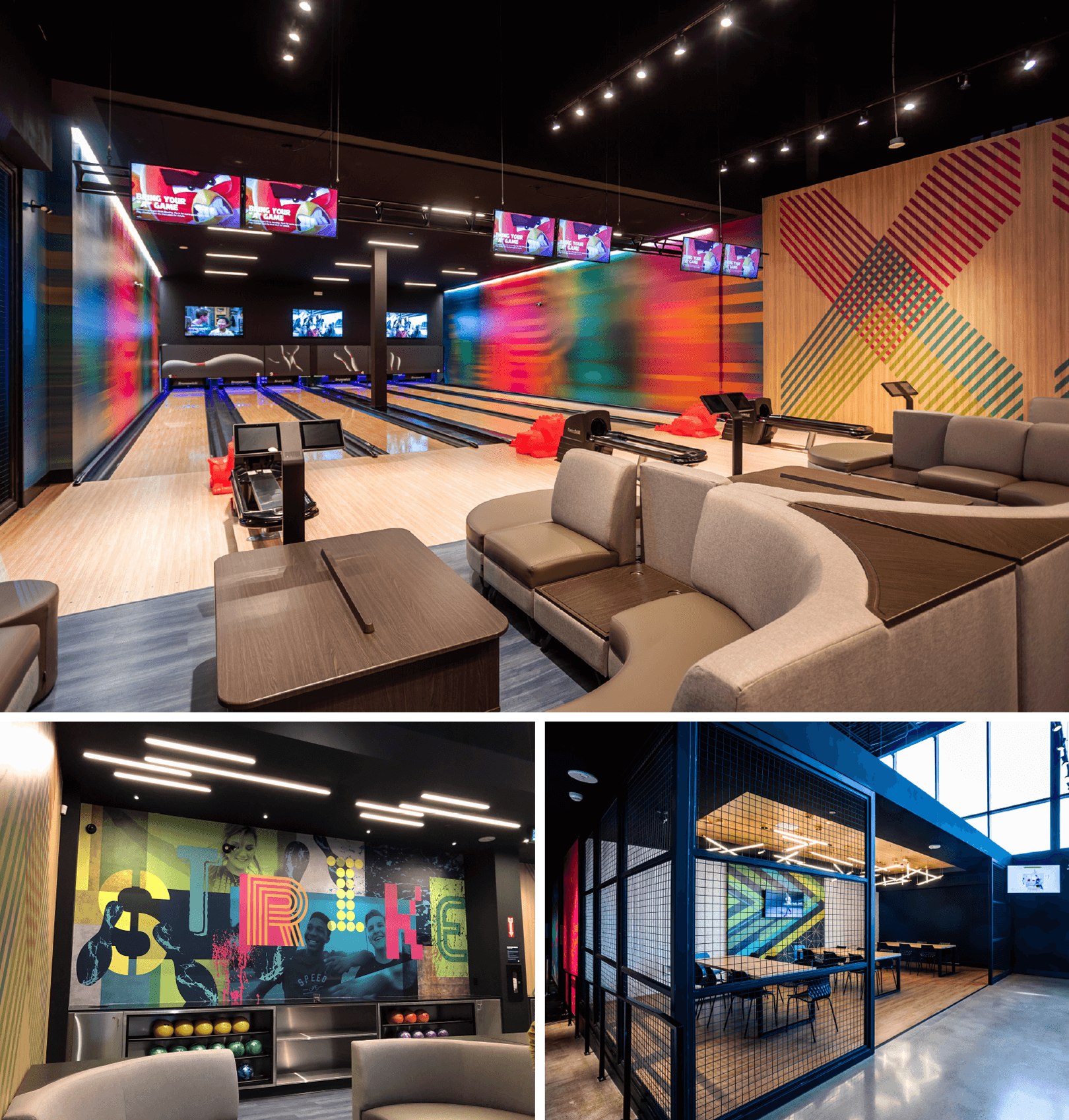
If you're curious to see how that same spatial approach works across other entertainment spaces, see how our team designed Playdium. Recognizing that Gen Z and Gen Alpha crave individuality, our design trades a single theme for distinct zones and event rooms, each with a unique personality and custom graphics that appeal to varying demographics. The layout features everything from high-tech VR and ropes courses to bowling and street-scape party rooms alongside multi-level dining for families. By eliminating rigid pathways, the design creates an environment made for genuine connection.
World-Building Without Barriers
Few brands master immersive world-building quite like LEGO. What sets LEGO apart is how effortlessly it proves that play is truly universal. No matter your age or skill level, there is a set made for you.
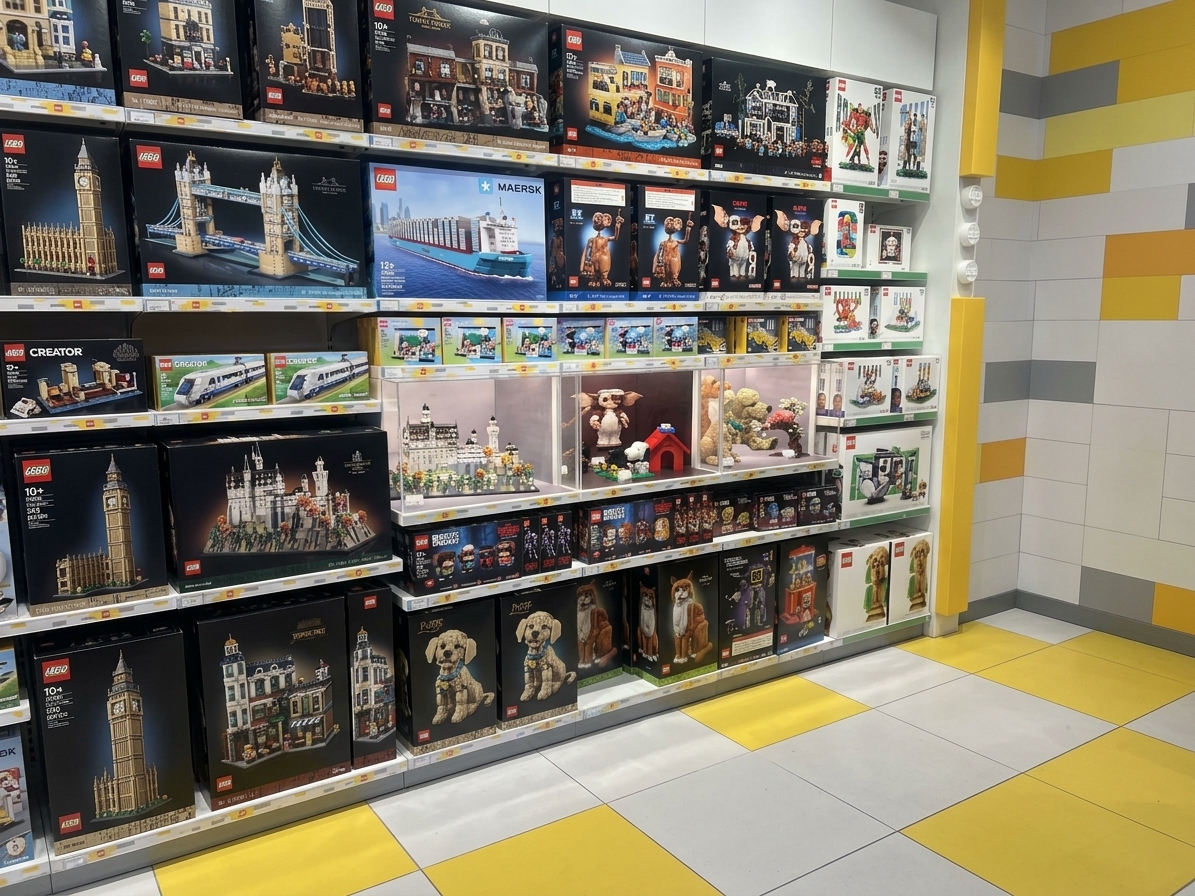
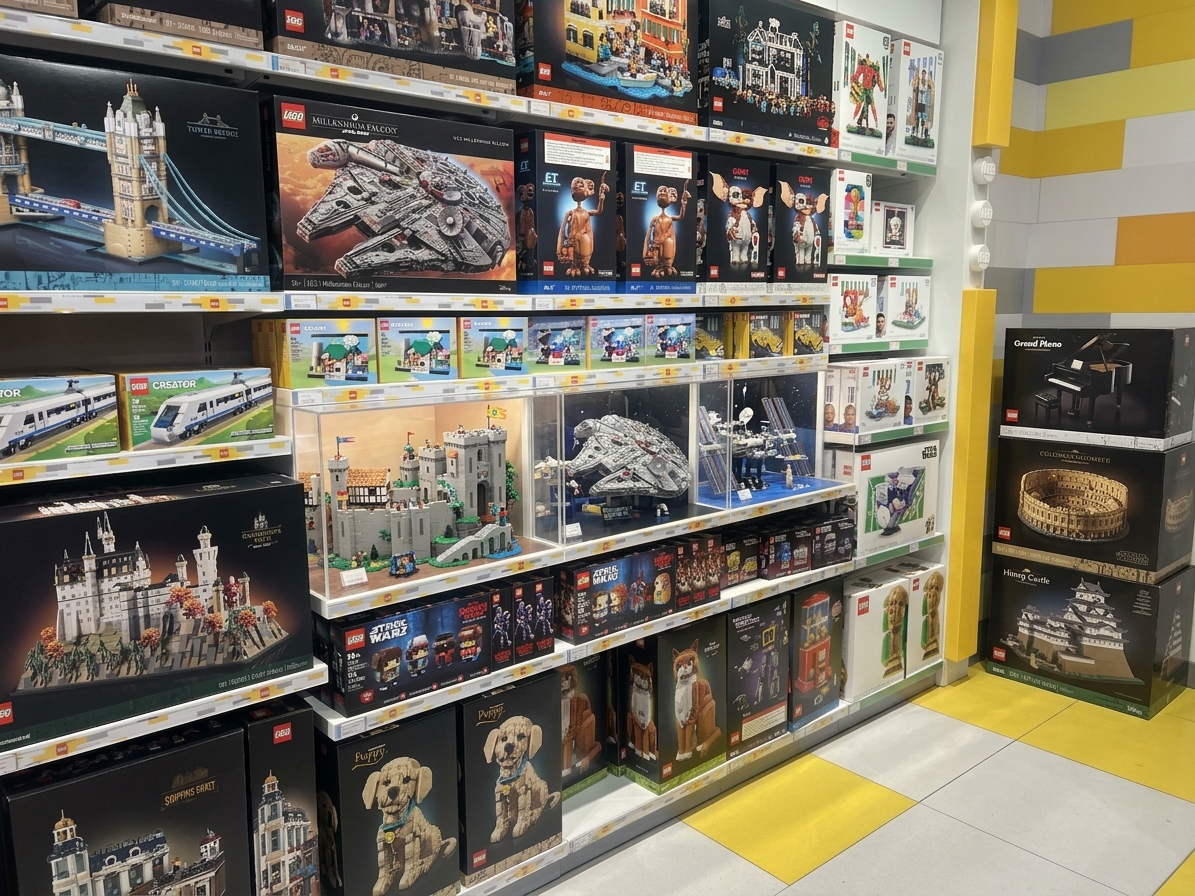
That dedication is clear from the entrance, where a LEGO-framed screen greets me with the latest releases. The surrounding walls are packed floor to ceiling with sets sorted by theme, from Disney and Marvel favorites to Creator Expert displays of higher-difficulty builds. Fully assembled models also span the shelves, giving shoppers a real look at what they can create.
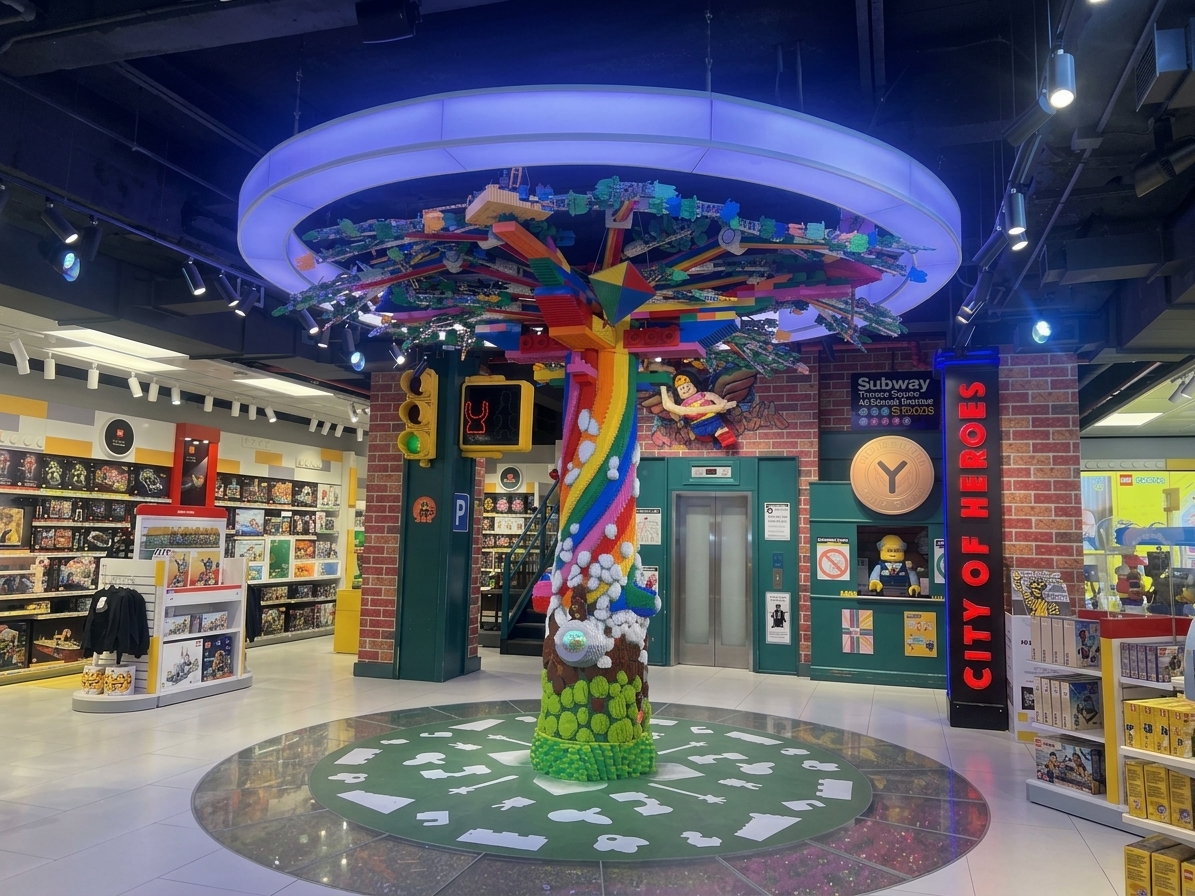
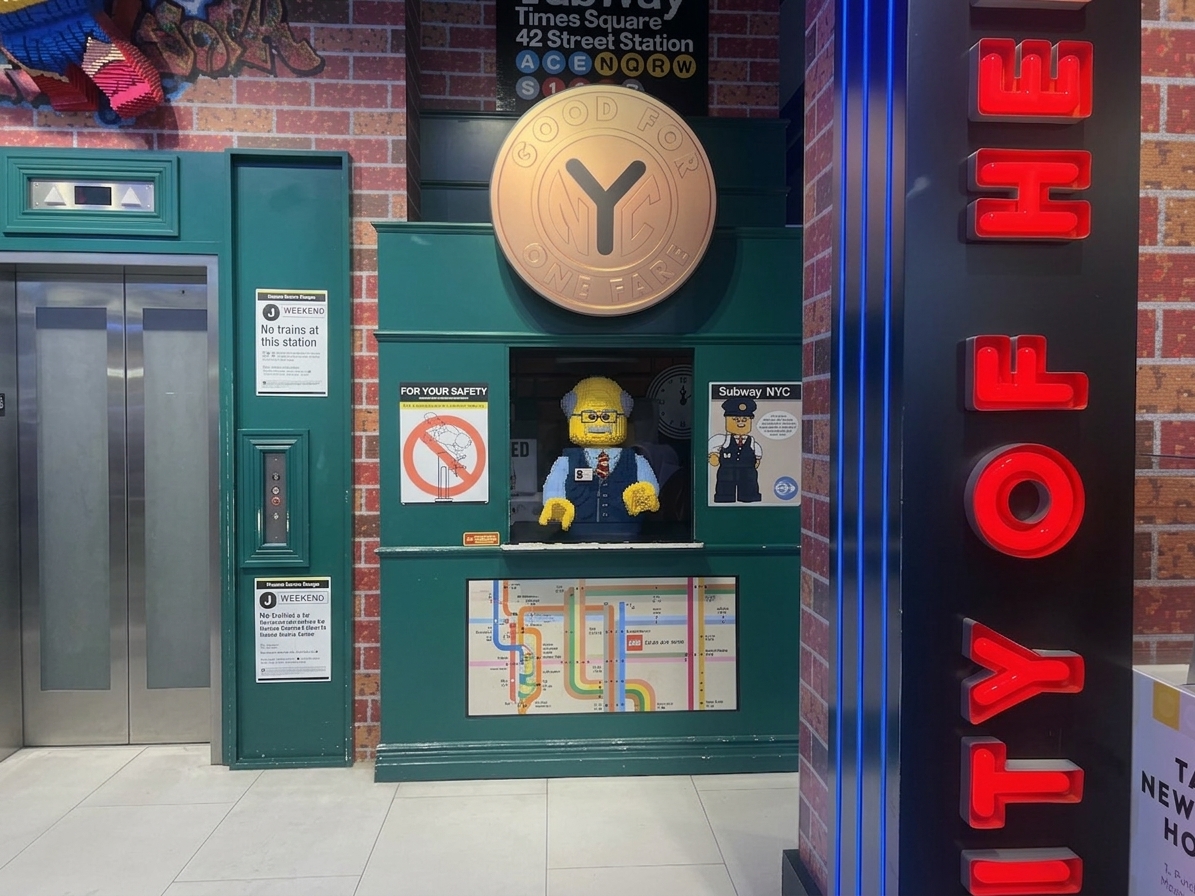
At the center of the store sits one of its biggest attractions, the Tree of Discovery. Walking up to the tree, I noticed how much detail it holds. As a whimsical centerpiece, it transforms its surroundings so completely that I nearly forgot I was standing in a store. For a moment, it felt more like being inside a living storybook. Just to the right, a LEGO subway attendant waits behind a kiosk, ready to punch my ticket up to the second floor, where the fun continues.
Shifting Customers into Co-Creators
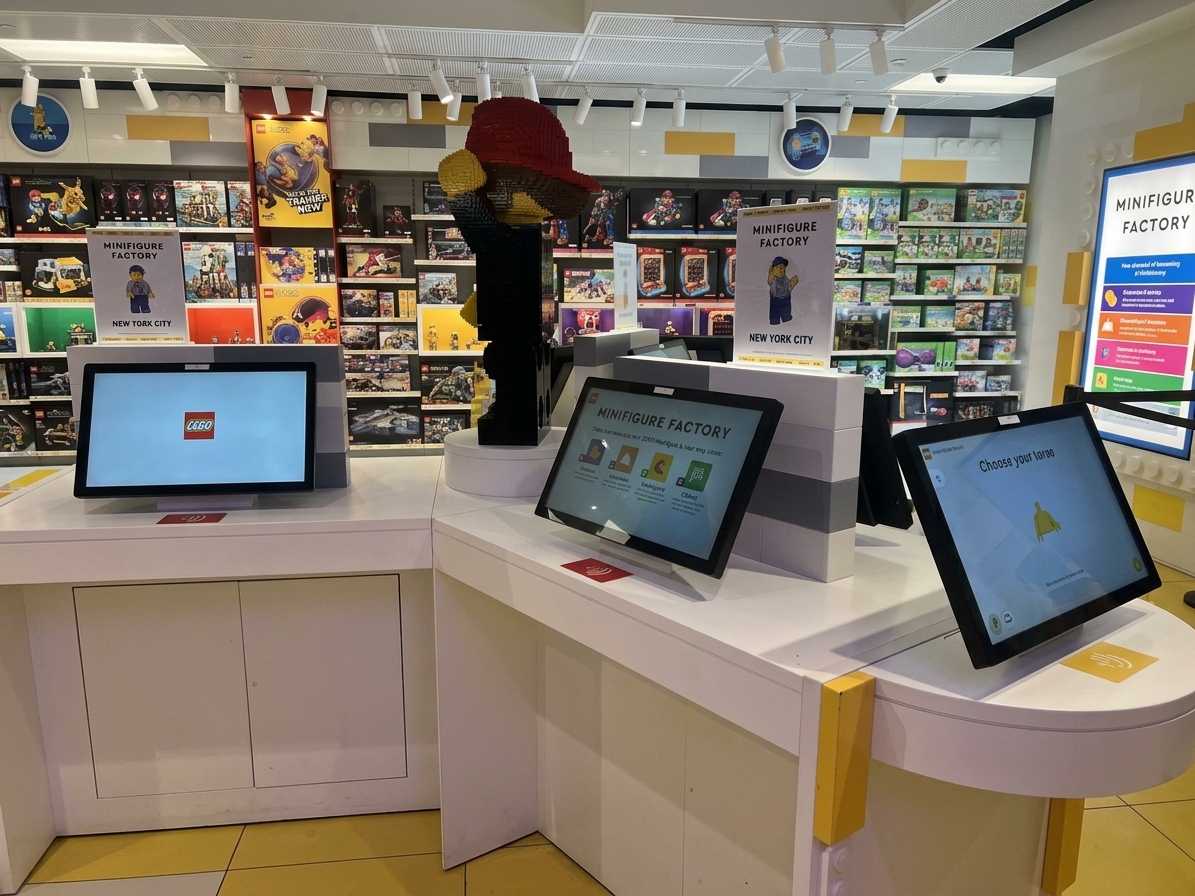
The second floor pushes play even further, shifting shoppers from buyers into creators. As I walked up the stairs, I was drawn straight to The Mini Figure Factory. Using interactive touchscreens, shoppers can sketch their own patterns, add text, or choose from exclusive local graphics. I spent a few minutes customizing a 'Mini-Me' with an I Love NYC shirt. I was ready to have it assembled, but with a flight to catch, I was unfortunately too pressed for time.
A few steps away is the Mosaic Maker, a machine that translates portraits into a custom building blueprint. Within just minutes, you can walk away with a kit of hundreds of tiny tiles to build your own LEGO self-portrait.
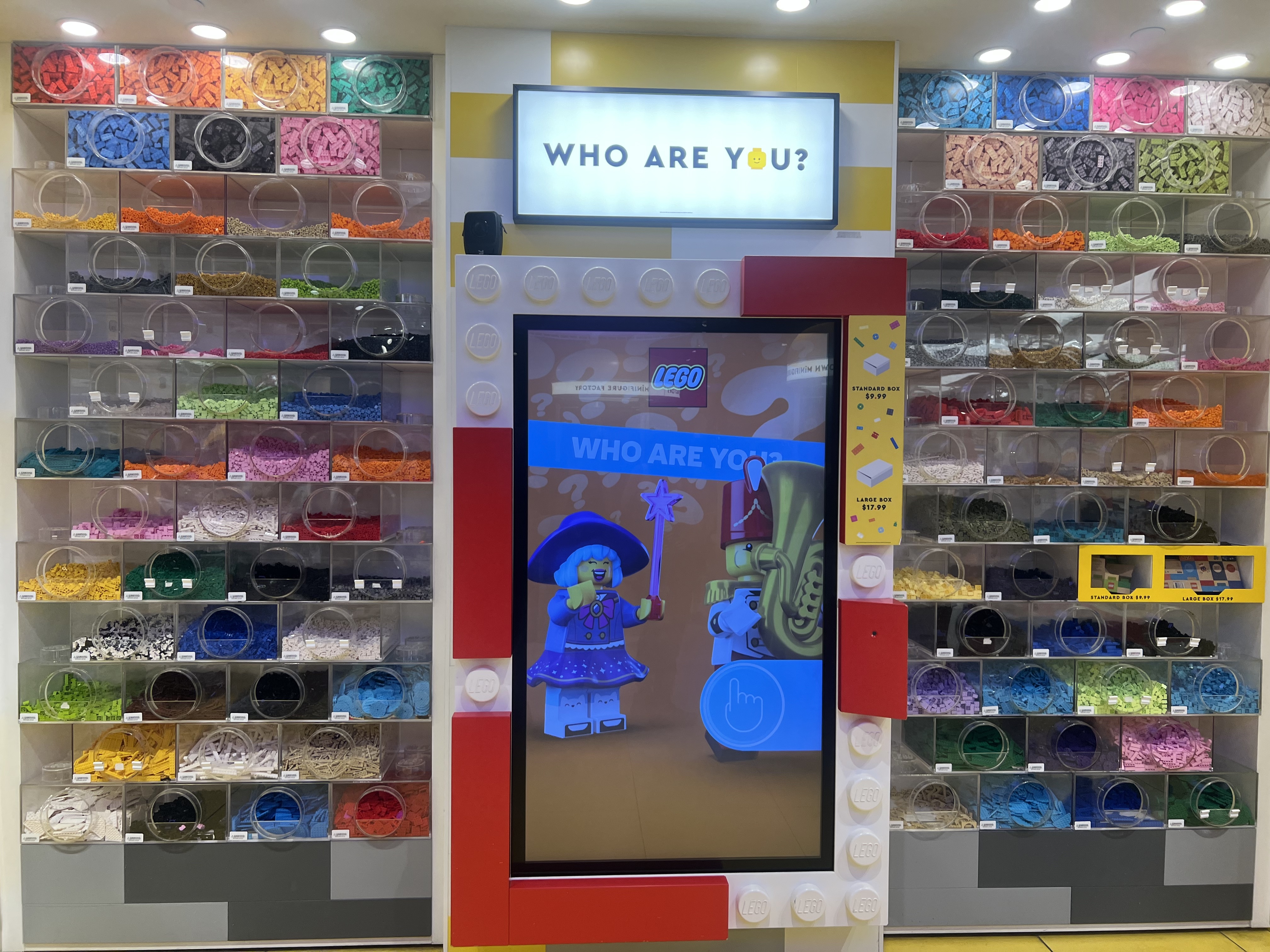
Rounding out the studio are open-bin stations for assembling mini figure three-packs, plus the Pick & Build Wall for sourcing specific loose pieces. Stacked clear bins of bricks are sorted by shape and color. It’s a goldmine for hobbyists and custom builders looking for specific pieces in bulk.
The Personalization Studio invites visitors to leave their mark on the brand, a strategy backed by behavioral science. Powered by what is called the "IKEA effect," consumers place significantly higher value on products they help create. Co-creation activations deliver a 30% higher success rate than static displays and drive a fourfold boost in customer loyalty. This underscores the heart of the LEGO brand. It’s not just about the final build, but the joy of getting lost in the process.
The Retail Lesson: Building an Experience
While many retailers struggle to compete with the convenience of online shopping, LEGO drives massive foot traffic daily. How? I think it comes down to how well the brand understands who's walking through its doors. A seven-year-old's browsing habits are nothing like an adult collector's, and LEGO designs for both without compromise. Through well-thought-out store zoning, the brand splits the customer journey. Children gravitate to the lower-height, high-energy brick bins, while adults explore the intricate gallery displays. Everyone wins.
The brand's approach to technology is just as deliberate. By layering subtle digital touchpoints onto its physical products, the brand enhances engagement without compromising its core tactile experience. It's a smart move in a world oversaturated with digital noise.
Customization stations let visitors make the classic LEGO their own. City-specific motifs ground the experience in local culture, turning the store into a must-visit stop for millions of tourists each year. Ultimately, LEGO proves that modern retail is about building an experience — brick by brick. My only regret was not giving myself more time to fully embrace the NYC LEGO experience before my flight back to Toronto.