
Mergers and acquisitions are altering retail faster than most brands can plan for. Every deal creates the same question: who’s going to design the network now?
Choosing an agency partner is kind of like dating. It’s easy to end up with an agency that can pull off a great-looking flagship. It’s much harder to find a long-term partner who is as focused on the growth of your brand as you are. For a 50, 200, or 500-location rollout, you need more than a sexy portfolio. The gap between a prototype that photographs beautifully and one that rolls out profitably comes down to questions most RFPs don’t address.
We’ve spent 30+ years taking retail and retail banking brands from first concept to production-ready prototype. Our team recently helped transform a network of 700 Manulife insurance locations, and we’re currently modernizing networks and building implementation playbooks for brands like WSS, Cox Communications, COBS, and many financial institutions in China with over 2,000 locations.
Here are the questions to ask that will separate a design agency from a true rollout partner.
Agency vs. Rollout Partner: Know the Difference
A store design agency produces a concept. A rollout partner produces a system. Multi-location brands need both:
- Creative vision that makes your physical presence distinct
- Operational infrastructure to replicate that vision accurately, on budget, and on schedule, across markets with different building codes, landlord requirements, and customer demographics
The firms on every “top retail design” list are usually built for one-off environments: gorgeous flagships, one-of-a-kind pop-ups, award-winning concept stores. That creative muscle is real. But managing 30 simultaneous location builds, tracking permit submissions across a dozen jurisdictions, and keeping brand integrity intact from location one to location 47 takes a completely different kind of organizational depth. Action step: Ask every agency on your shortlist: how many locations have you managed simultaneously in active design and documentation? A firm that’s handled one project runs differently than one that’s handled 30. Team depth, QA systems, and documentation workflows all scale differently. If they’ve never operated at your target volume, they’ll be building those systems on your timeline, at your expense.
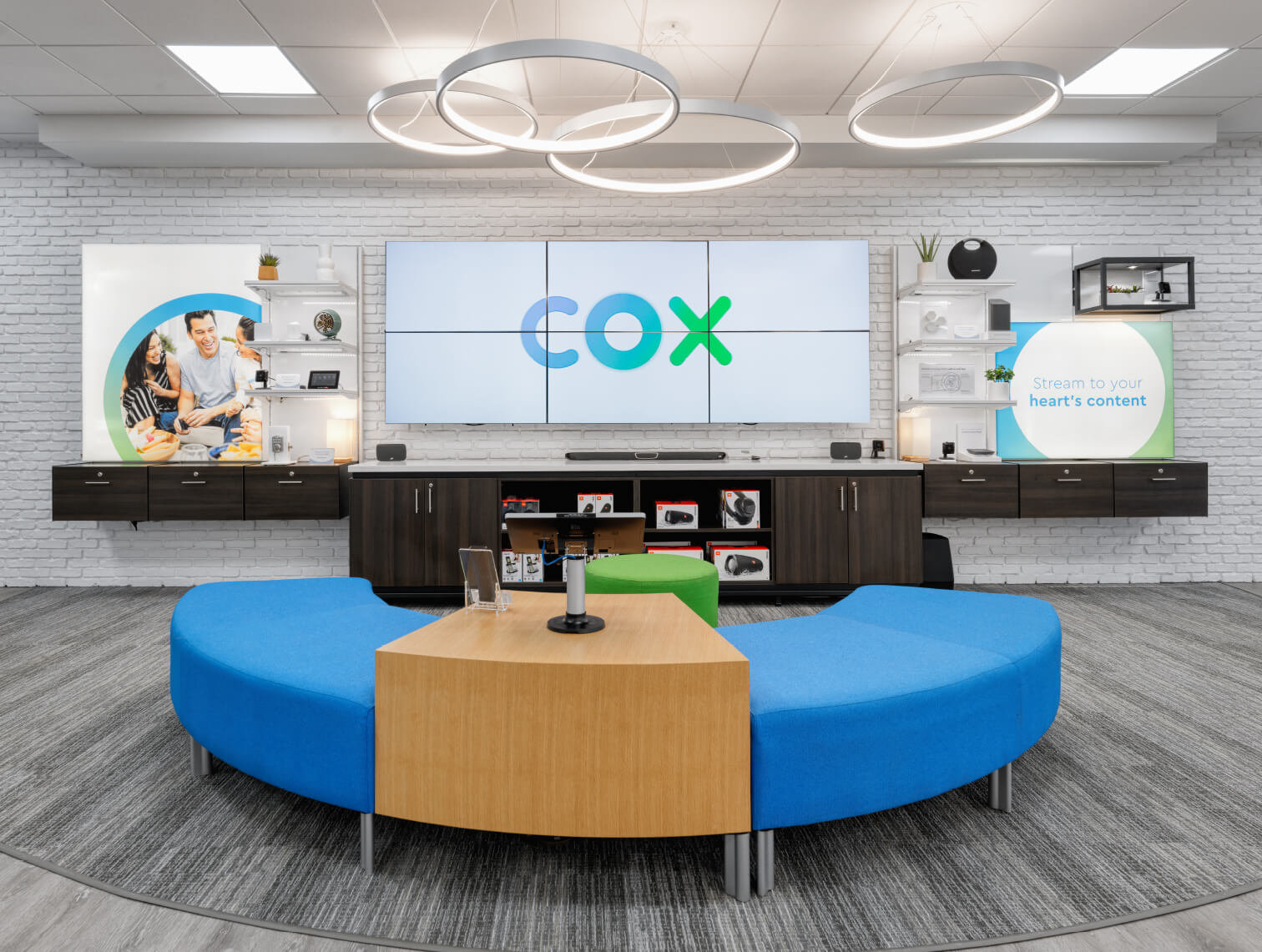
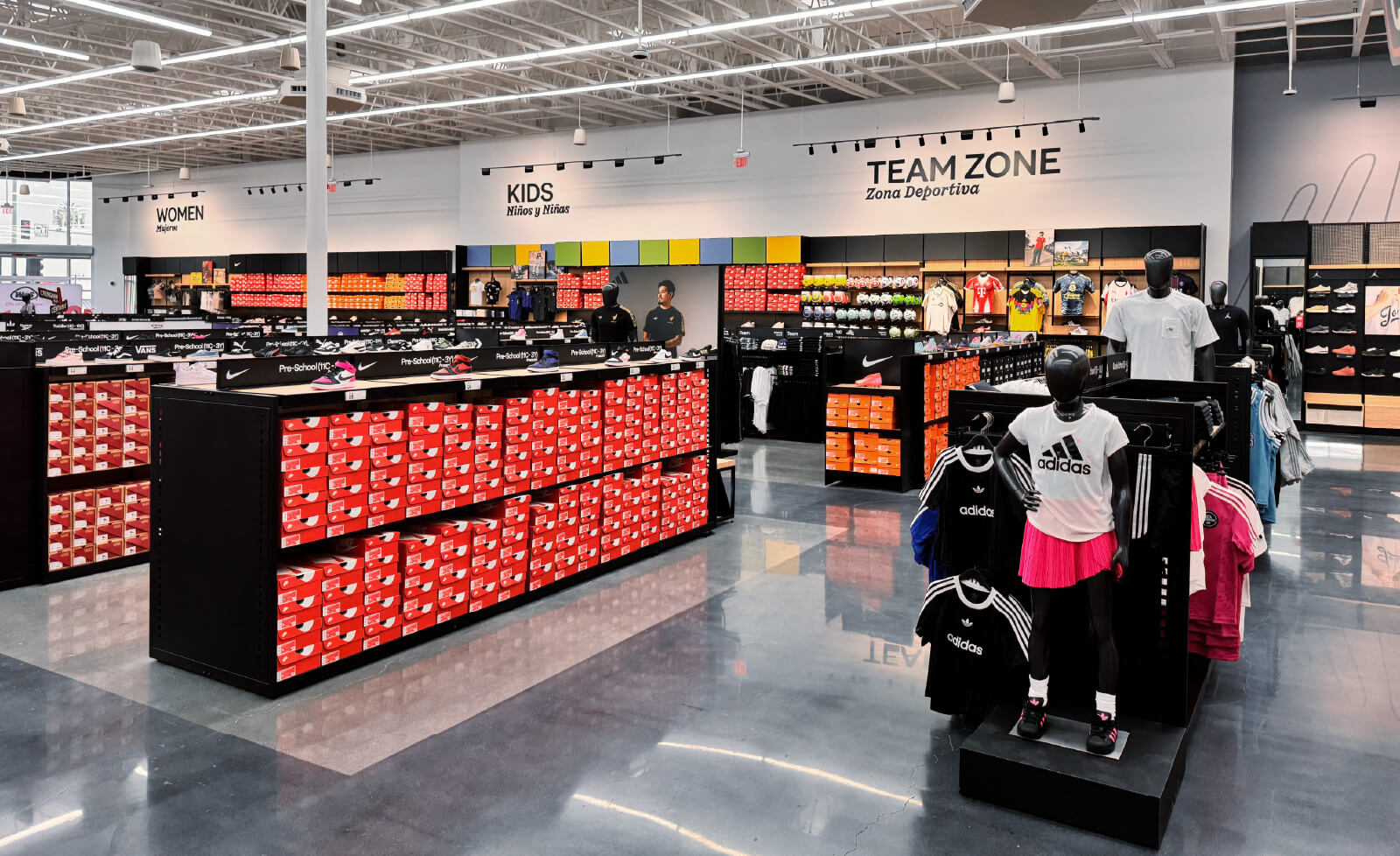
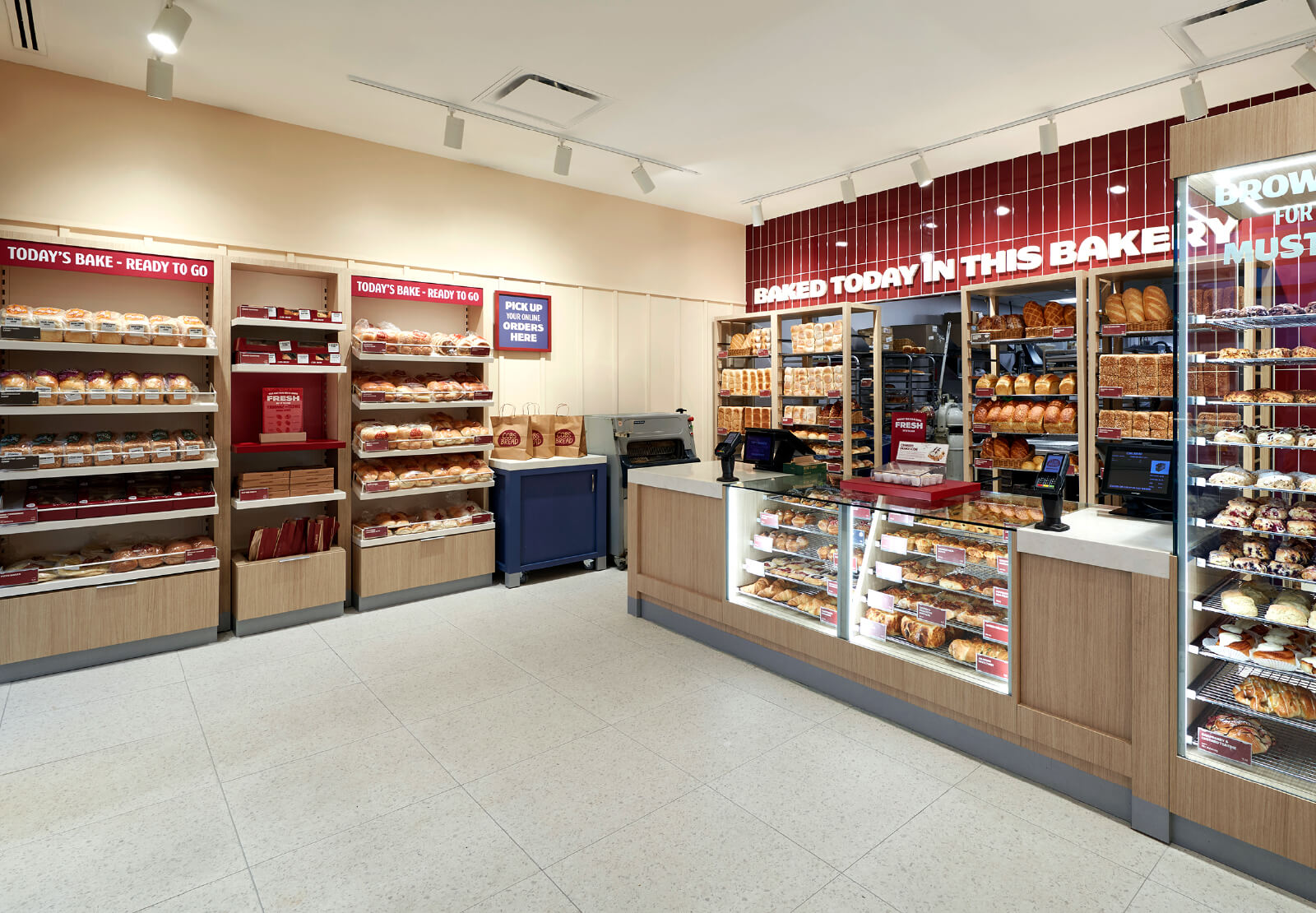
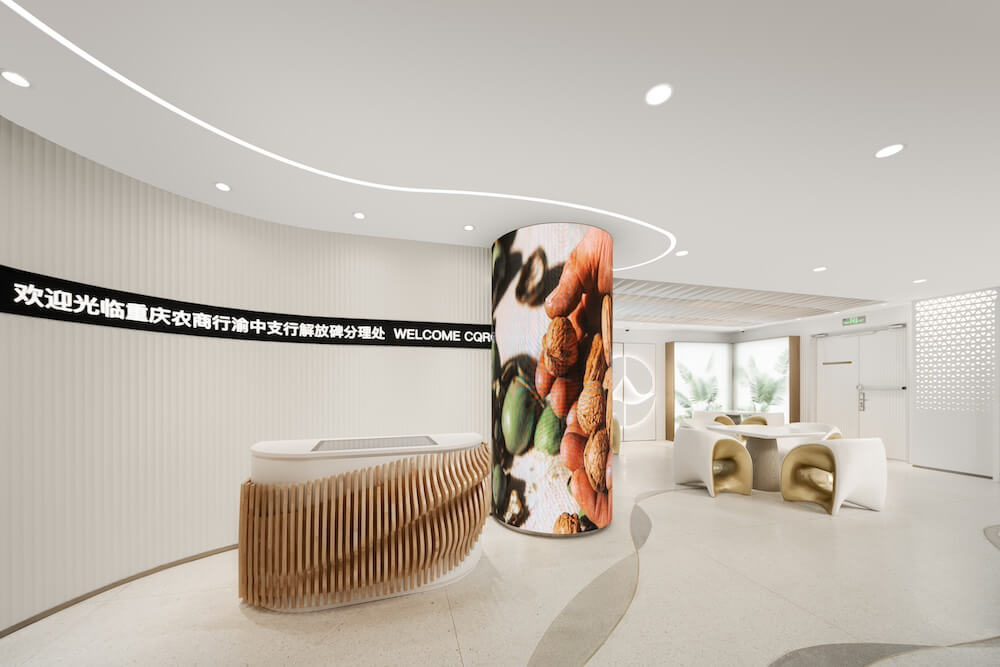
Image Source: SLD (Shikatani Lacroix Design)
How to Evaluate an Agency’s Concept-to-Prototype Process
This is where agency relationships prove themselves. A rendering is a promise, but a prototype is proof. Push on how an agency actually moves between the two:
- How do they validate concepts before committing to prototyping? The best agencies build validation into the process itself, not as an afterthought. At SLD, we build validation into every step of the process. We map employee and customer scenarios before design directions are finalized, so concepts get tested against real functional realities, not just how they look on a board. And in-house consumer research capabilities mean we can act quickly to get feedback.
- How do they translate design intent into construction documents? A concept built on custom materials, non-standard dimensions, or one-off fabrication at every site will bleed your rollout budget dry. Agencies with real rollout experience design for production from day one. They know which materials survive different climate zones, which fixtures can be sourced regionally, and which elements can flex across footprints without losing brand impact.
- How do they define “prototype complete”? For some agencies, that means one built location. For roll-out-capable agencies, it means a fully documented package: construction drawings, material specs, fixture schedules, signage guidelines, and a variance protocol for non-standard sites. Add to that a detailed rollout playbook covering multiple layout configurations and solutions for common site-specific problems. That’s what keeps implementation consistent and less costly across areas.
Action step: Request a review of a sample “prototype complete” package from a past project. If it’s a single rendering set and a punch list, keep looking.
Why Industry-Specific Experience Matters – and One Caveat
The underlying design principles of customer journey mapping, wayfinding, and brand narration through environment translate across sectors. The operational knowledge does not. That being said, agencies that work in a singular sector run the risk of approaching every brand the same way, so beware cookie-cutter portfolios.
- Multi-location retail: This is a balancing act between providing a consistent experience across an inconsistent, regionally nuanced network. A prototype built for a 2,400-square-foot inline mall unit has to flex into a 4,800-square-foot street-level space without losing its identity. Ask for examples of the same prototype adapted across meaningfully different site conditions to see how the agency handles this.
- Retail banking: Banks typically have a range of formats. Figuring out what goes where and how much to invest on a location-by-location basis is a complex challenge. This is especially true when it comes to legacy branches that may have cultural significance – for example, historic buildings – but are no longer key growth locations. We’ve worked with banks to develop tiered models based on revenue, cultural significance, potential growth, and format to ensure investments are aligned with business objectives.
SLD works in multiple retail categories, including retail banking, and that cross-pollination sharpens our approach. For example, telcos can learn a lot from the efforts retail banks have made in shifting low-value transactions to self-service. Our Blink Factor philosophy focuses on the instant of customer decision-making and how design drives emotional connection, which is mission-critical for every brand in every category. Action step: Don’t just look at work in your industry – scrutinize the strategy to ensure they aren’t taking a templated approach. Ask potential agency partners to walk you through how a design decision in one sector changed their thinking in another.
Questions That Reveal Whether an Agency Can Manage a Network Rollout
As we’ve stated, creating a stunning flagship shows an agency can deliver on a specific task. Flagships, however, typically get bigger budgets and are evaluated on different metrics compared to the rest of the fleet. These are the questions that will highlight if a potential design partner is also rollout-capable.
- What’s your average timeline from site confirmation to permit-ready documentation? Rollout-experienced firms typically know how long this takes. If they can’t give you a number, their process isn’t built for volume.
- How do you manage brand standards compliance across multiple general contractors and markets? You want to hear: documented specifications, milestone-based design reviews, and a clear escalation process for field substitutions. If the answer relies on “the project manager’s good judgment,” expect inconsistent results.
- What does your team structure look like during peak load? Ask for the org chart from their busiest stretch. If the principal is personally reviewing design for every location, that’s a bottleneck. You need distributed decision-making with clear quality gates.
- Do you produce a Transformation Playbook or equivalent rollout documentation? At SLD, we build a master rollout plan that functions as a road map, whether you’re using our project management team or your own. That documentation is what keeps brand intent alive from design studio to construction site to opening day.
Action step: Score every finalist against these four questions before you look at a single rendering. It will change your ranking.
Look Past the Aesthetics: Assess Strategic Capacity
The most common mistake in agency selection is judging only the visual output. A prototype that looks exceptional but skipped the strategic groundwork tends to age poorly and underperform commercially.Look for agencies that deliver strategy upstream of design:
- Benchmark studies that evaluate your competitive set by structured analysis
- Customer experience assessments that pinpoint where your current environment is underperforming
- Positioning work that articulates your brand’s point of difference before design work starts
- This upstream work is the difference between a design that “looks like your brand” and one that achieves your brand’s commercial objectives. Our proprietary ThinkBlink process puts strategic research and customer insights before every design engagement, not after.
- Agencies that jump straight to mood boards and materials palettes without this foundation are designing on intuition alone. Intuition produces good work occasionally. Process produces good work repeatedly, and that’s what multi-location rollouts demand.
Action step: Ask to see strategic deliverables from a past engagement, separate from the design portfolio. If strategic insights are sprinkled in, that suggests limited capability. Examples include benchmarking studies, positioning programs, CX assessments, primary consumer research, and scenario planning.
Where Digital Marketing Fits in Your Agency Decision
Physical retail is no longer a standalone experience. Digital experience is now a baseline expectation. Your agency needs to treat it as intrinsic to the design, not a separate assignment. That means content strategy, technology platform requirements, and digital touchpoint placement need to be part of the initial concept phase. Ask directly: Do they have digital experience capabilities in-house, or do they subcontract it?
- In-house means physical and digital are designed as one system.
- Subcontracted often means two teams negotiating instead of collaborating.
Our digital experience work covers strategy, technology platform selection, playlist and content planning, and integration across the path to purchase. When digital is embedded from the start, it supports the customer journey instead of interrupting it. It also supports the use of data to support future business decisions. The agency you choose today determines whether your store is ready for that measurement or playing catch-up.
The Bottom Line
Choosing a retail store design agency for a multi-location rollout is an operational decision as much as a creative one. What actually determines whether your rollout stays on budget, on schedule, and on brand across dozens or hundreds of locations is:
Process
- Team depth
- Documentation rigor
- Willingness to own the outcome past the rendering stage.
Ask the hard questions early. You’ll find the partner who can deliver at the scale your brand actually requires. To discuss how SLD approaches concept-to-prototype and fleet rollouts, connect with our team on our Connect With Us page.