
Every business wants a great name, one that’s memorable, distinctive, maybe even a little unexpected. The kind of name that sticks in people's minds and, over time, becomes synonymous with the brand itself. Landing the right name takes more than creativity. It takes strategy, which is why we developed our own naming process.
Think Kleenex or Tide. These names have become so familiar to us that they've worked their way into our everyday vocabulary and purchasing habits. We might ask for a Kleenex instead of a tissue, regardless of the brand we're actually using. That's the power of a strong brand name.
Tide commands over 40% of the total U.S. market share, even though basic cleaning products are more or less identical. And it's not because its competitors can't make soap; it's because the Tide name has created a clear brand perception in the aisle.
But this level of recognition doesn't happen overnight or by accident. Behind every memorable name is a combination of strategic thinking, positioning, and often years of consistent brand building. In this blog, we share a few insights from our naming guide to help frame your next naming brainstorm session.
Why Brand Naming Has Become More Complex
A big hurdle in brand naming is availability. Many simple names are already trademarked or have taken domain names, forcing brands to explore alternative spellings, invent new words, and spend big bucks to get the name they want. For brands operating internationally, it can be even more complex as names must also work across different languages, cultures, and markets.
The team at SLD faced this exact challenge while developing potential brand names for a healthy indulgence food company targeting the Chinese market. After a brand positioning exercise, our team narrowed the options down to five names. Each had been carefully considered against a specific set of criteria: the name must work in China and have some degree of Western/North American meaning. It needed to be easy to remember and pronounce. It also required two to three Chinese characters in length, and the phonetic articulation could not have any negative references.
To put the names to the test, we asked our client's sales representatives in China to review the shortlist. That's when things got interesting. Of the five names we had developed, only one passed every requirement, and it wasn't even our preferred choice.
This project was a reminder that what looks good on paper doesn't always translate into the real world. That’s why we created a list of criteria to consider when evaluating potential brand names:
- Trademark and URL are available
- Can be easily pronounced in the native language
- Has no negative pronunciation or phonetic impact in other languages
- Is memorable with strong recall capabilities
- Differentiated
- Reinforces the brand promise
- Easily transferable to a visual metaphor
- Will not be easily dated
Effective Brand Naming Begins With a Clearly Defined Brand Card
One of the most common mistakes in naming is confusing personal preferences with strategic relevance. A leadership team might gravitate toward a name because it sounds sophisticated, but a creative team might favour something more unconventional. Others may prefer a literal description of the business. All are valid perspectives, but none answers the most important question: does this name characterize what makes the brand different?
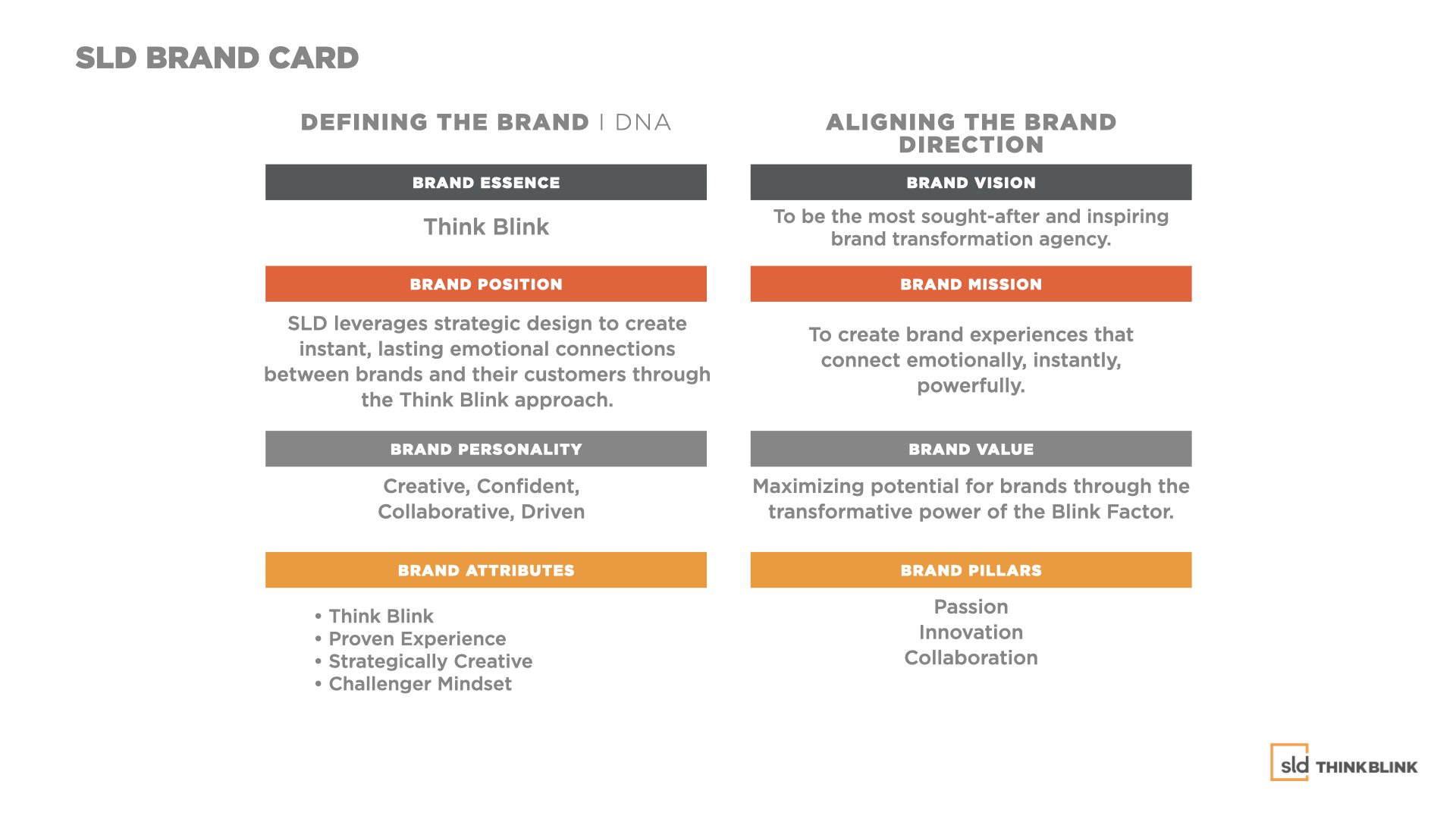
We believe effective brand naming begins with a clearly defined brand card. This brand card is made to establish your organization's brand essence, proposition, personality, and attributes, and to bring brand vision, mission, values, and brand pillars together to guide the naming process.
There's More Than One Way to Make a Name Memorable
Great brand names don’t follow a single formula. The right approach depends on your industry, audience, and brand personality.
Some of the strongest names tell you exactly what a business does. Others tell you almost nothing, at least at first. Take General Motors, for example. Its descriptive name makes an obvious connection to the automotive industry. Kodak, by contrast, is an invented name that has built its own meaning over time.
Our Naming Your Organization guide explores 13 different naming approaches. These are a few examples:
- Descriptive: Names that either describe the product or its characteristics, such as Duolingo and General Motors.
- Made up: These names have no rhyme or reason other than being unique and not creating a negative connotation, such as Kodak and Velcro.
- Geography: Names which define a region are common within the wine and beverage industry, such as Fuji.
- Evocative: Names that evoke the tone of the brand, such as London Fog and Glossier.
There are 9 more categories, and each approach has its strengths. Ultimately, the best choice comes down to what you want people to think and feel when they hear your brand's name.
The Steps to Evaluating Potential Brand Names
Of course, originality matters; after all, you don't want customers confusing your brand with a competitor. But a great name also needs to be practical and support your brand's long-term goals. Our ThinkBlink naming process outlines 11 steps to help get it right. Here are the first four:
- Start with a well-defined brand card: What is critical to the success of the naming process is ensuring that the participants have a clearly defined brand card from the start.
- Make sure you have clearly defined naming criteria: You should establish clearly defined goals your name options must meet. Confirm these criteria play their part in the briefing and the selection process.
- Select a diverse group of thinkers: To have the broadest range of options, your brainstorming group must have a diversity of experience and be reflective of the target group. Double-check that you have a facilitator as part of the exercise.
- Plan an effective thinking space: A good naming exercise takes more than half a day and needs to be outside your offices to avoid any distractions or interruptions. Ensure that everyone leaves their smartphones, tablets, or computers behind.
Ready to Find a Name that Reflects What Makes Your Brand Different?
Our Naming Your Organization: Defining Relevant Brand Nomenclature guide outlines SLD's ThinkBlink naming process in its entirety, including the different types of brand names and criteria that matter when evaluating them. It also includes a practical worksheet to help turn creative exploration into a structured naming exercise.
Looking for the right name for your brand? SLD combines strategic thinking and creative exploration to develop names that capture your brand's identity and resonate with your audience. Connect with our team to get your naming project started.