
For most telecom leaders, the dashboard still focuses on churn, ARPU, cost-to-serve, call resolution, and network performance. These measures matter, but they do not show whether customers trust the brand, feel supported, or believe the experience is worth staying. That is the real issue.
SLD’s research highlights a common challenge in business strategy: organizations often focus on what is easiest to measure rather than the factors that truly drive long-term loyalty and growth. Although the original study focused on banking and retail, the lessons are increasingly relevant for the telecom sector. In a market shaped by digital disruption and rising expectations, the overall experience has become a primary differentiator for customers.
The study introduced the concept of Return on Experience (ROX) as a way to connect customer and employee satisfaction to business performance. By surveying over 600 senior managers and gathering feedback from 1,600 customers, the research aimed to identify what organizations prioritize, what they might be overlooking, and how those gaps impact their ability to adapt.
Ultimately, the findings suggest that while traditional ROI remains a standard metric, customers often make decisions based on more human elements. Factors like ease of use, confidence, trust, and emotional reassurance are what build genuine advocacy. For telecom operators, moving beyond technical benchmarks to focus on these experiential drivers is key to finding a competitive edge.
Why this Matters
Telecom faces many of the same structural issues as the banking sector in the study. Customers move seamlessly across apps, websites, stores, contact centers, chat, and field service interactions. Yet most organizations still measure those touchpoints in isolation instead of managing the experience as a whole.
The research also found that many institutions do not adequately measure the pre-purchase stage. Most attention goes to purchase and retention, even though experience plays a major role in attraction, conversion, and long-term loyalty.
That maps directly to telecom. A telco may track activations, retention offers, and complaint volumes well, yet have little visibility into what happens before the sale: brand consideration, plan clarity, trust in promotional claims, or the anxiety customers feel when switching providers. In the study, customer loyalty was an important leading indicator, but tools such as sentiment monitoring and the Net Promoter Score were underused. Many firms say they want loyalty but do not measure the conditions that create it.
There is a broader warning for transformation leaders. High-growth institutions were more likely to track ROX metrics and use a wider set of tools, including ethnographic research, social media monitoring, and customer complaint analysis. Lower-growth organizations measured fewer experience indicators and relied more on operational metrics. For telcos, network investment and digital modernization will not be enough if the human experience around onboarding, service, billing, and support remains invisible.
5 Crucial Insights from the ROX Study
1. Confusing Business Outcomes with Customer Experience
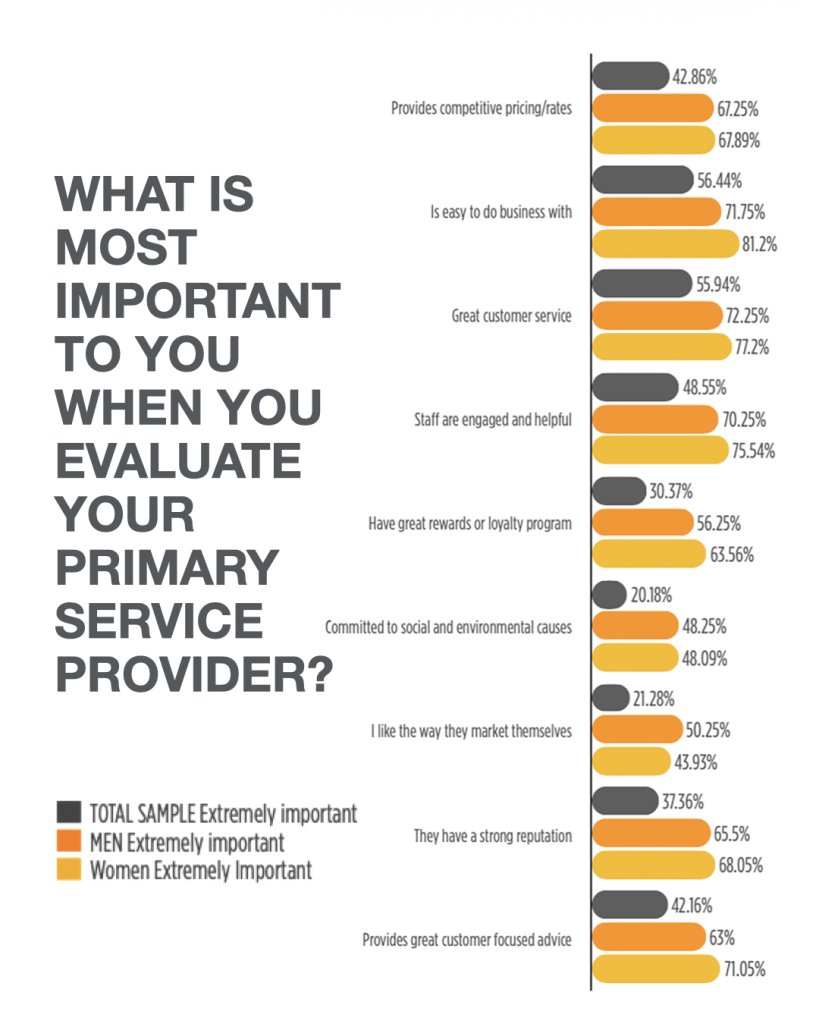
In the study, financial institutions cited profitability, performance accuracy, planning, and customer lifetime value as key reasons for tracking ROX. Consumers, however, valued ease of doing business, excellent service, and engaged, helpful staff more. Telecom falls into the same trap when it prioritizes average handle time or digital deflection over a simpler question: did the customer feel understood, confident, and reassured?
2. The Underdevelopment of Human Metrics
The report found that organizations did not adequately measure employee engagement, company culture, skill gaps, change adoption, or sustained momentum for transformation, despite their direct impact on experience delivery. In telecom, where store associates, technicians, and service agents often define the brand more vividly than advertising, that gap is especially dangerous.
3. Convenience Alone is Not Enough
In the banking study, even convenience-led channels like ATMs and apps needed reassessment through an experience lens, not just speed or efficiency. Telecom should take this as a direct challenge. Self-serve apps, chatbot journeys, IVR flows, and online plan changes cannot be judged only by containment or completion rates. If they create confusion, force repetition, or leave customers uncertain, they may seem efficient operationally but damage the brand.
4. Physical Channels Still Matter
The report showed that branches remain important and renovated branches drove higher visitation and growth, including a stronger impact among younger consumers. For telcos, the lesson is not just to update the store footprint. It is to rethink stores, kiosks, field service visits, and business service environments as branded experience platforms that, when designed well, reduce friction, build trust, simplify decisions, and support cross-selling.
5. The Internal Implementation Gap
Across financial services, major barriers to transformation included too many competing priorities, insufficient resources, siloed efforts, and constant pressure to demonstrate ROI. Customer-centric transformation was less common than fragmented, department-led change. Telecom often operates the same way. Marketing, digital, network, retail, and care each improve their own KPIs, but no one truly owns the end-to-end experience.


Image Source: Shutterstock
Action Plan
- Rebalance the scorecard. Keep the hard business metrics but add a disciplined layer of ROX measures, including customer sentiment, effort, confidence, emotional reassurance, frontline engagement, issue recurrence, and trust at critical moments such as plan selection, installation, outage recovery, roaming, and bill shock.
- Measure earlier in the journey. Pre-purchase is often the weakest part of the measurement model, though it has an outsized influence on growth. Telcos need better visibility into what prospects and switchers experience before they buy, such as clarity, transparency, anxiety, and confidence.
- Upgrade the research mix. Many organizations still over-rely on conventional quantitative tools and third-party reports. Telcos should combine operational data with in-the-moment journey feedback, social listening, and frontline intelligence to understand what customers are actually feeling,
- Make ownership cross-functional. The study points to the need for stronger internal alignment, fewer silos, and a more deliberate commitment to customer-centric transformation, supported by leadership, training, and human-centered design. For telcos, the opportunity is to build a management system that connects network quality, digital journeys, retail experience, service culture, and brand trust, because that is how customers experience the brand.
- Discover SLD’s AI-powered Transformation Assessment Tool. In just a few questions, see exactly how well your business is equipped to adapt and compete in a rapidly changing market.