
Every telecom leader we surveyed knows change is coming. Almost none of them are set up to deliver it.
In partnership with MapleWave, Shikatani Lacroix Design (SLD) surveyed 400 telecom decision-makers across Canada, the United States, Spain, and the United Kingdom, alongside in-market audits of major retail players. One conclusion held across all four markets: urgency is universal, but execution is lagging far behind.
Urgency is Universal. Delivery Isn't
The study highlights a staggering disconnect. Across all markets, between 76% and 91% of leaders acknowledge their brand or customer experience needs moderate-to-high change. Yet, fewer than a quarter operate with fully automated, customer-validated systems. As consumers increasingly demand seamless engagement, this creates a critical category-wide gap between leadership vision and the reality delivered at the counter, on the phone, and in the app.
Together, these metrics reveal a pattern. Most transformation efforts are purely cosmetic: new messaging, refreshed fixtures, a reworked website. Meanwhile, the underlying customer journey remains tethered to legacy silos and manual workarounds. Workarounds aren't a solution since they mean longer wait times and slower onboarding. These errors result in repeat visits for issues that should have been resolved the first time.
Leaders Believe in Emotional Branding. Customers Can't See it.
Here lies the critical challenge for telco relevance and differentiation. Emotional brand ownership ranges from 68% to 78% across all four markets. Telco leaders genuinely understand what an emotionally powerful brand is worth. But only 10 to 13% per market describe their brand as strongly and distinctly positioned.
We noted the barrier isn't conviction. It's commitment to bringing the conviction to life. A vision and emotional anchor, translated into storytelling, design, or experience, help customers tell you apart from the operator next door. And in a category that has trained its own customers to shop by price, that failure to differentiate is precisely why attrition is such a punishing line item.
It's also the cheapest lever left. Network parity is arriving whether telcos like it or not, and cost equivalence is right behind. Emotional differentiation is one of the few moves available that doesn't require waiting for either.
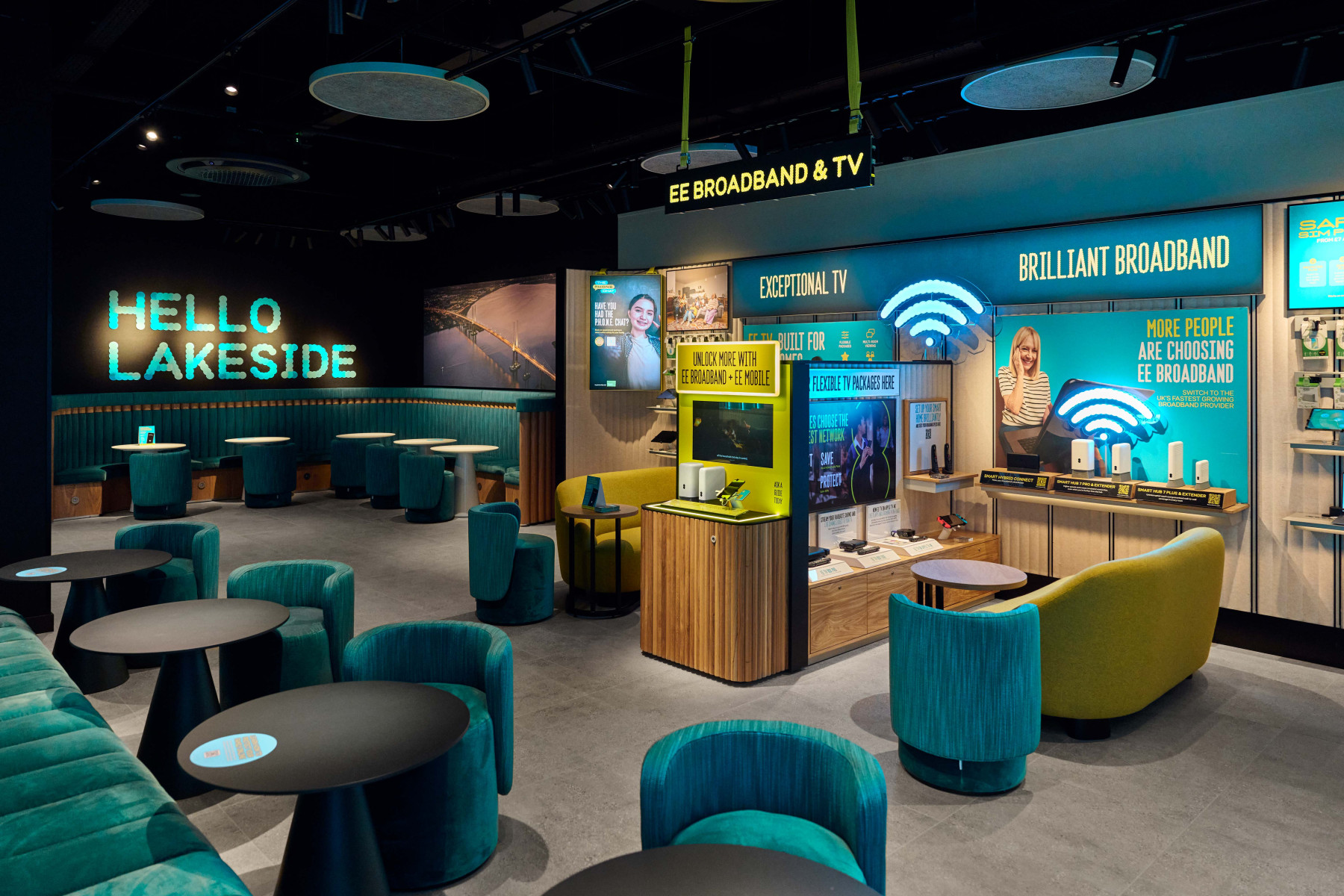
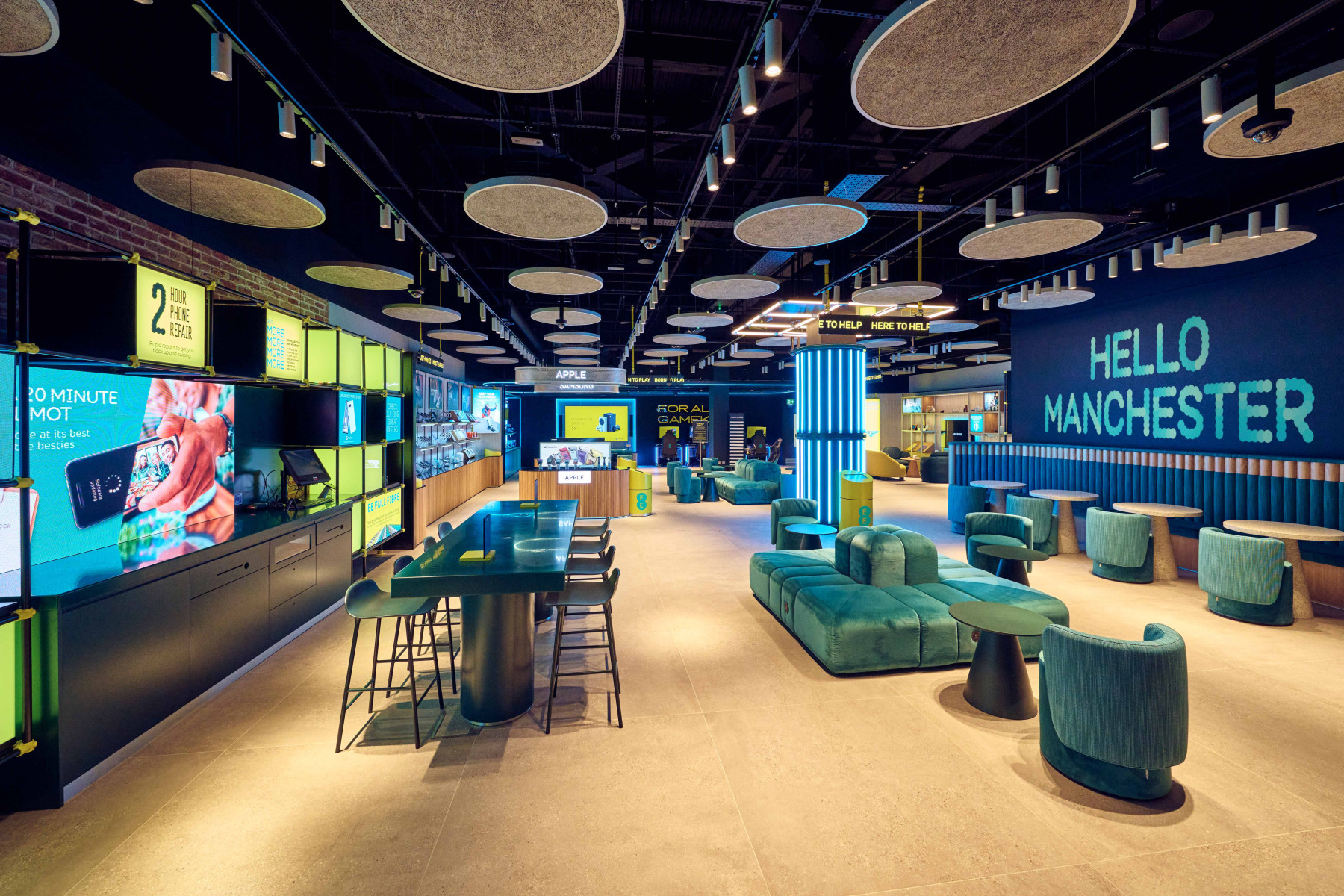
Two UK operators are proving it's a choice, not a market condition. EE has quietly rolled out what may be one of the country's most effective new retail formats, a layout organized around the customer journey instead of the fixture plan.
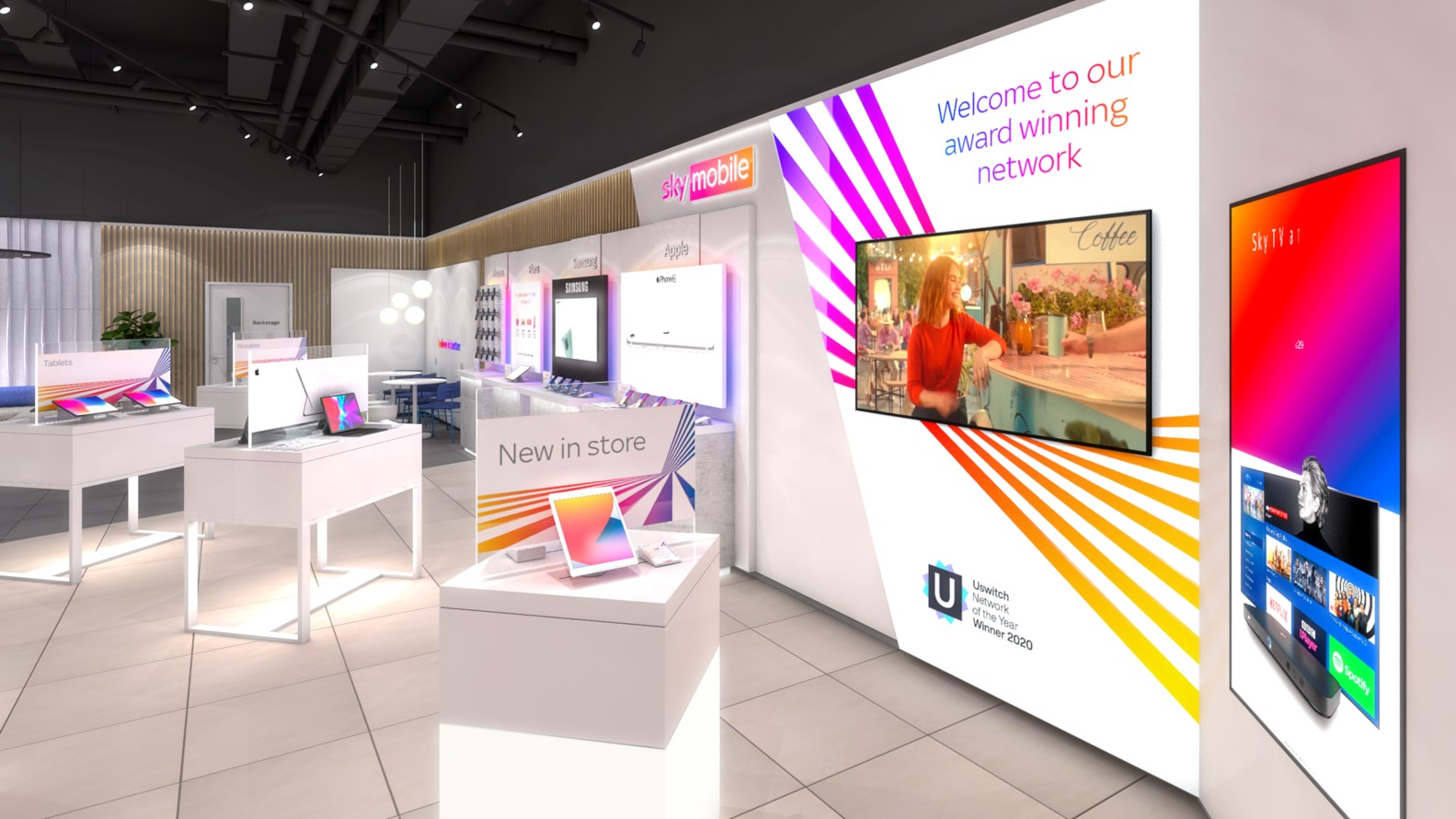
Sky goes further: walk into a Sky store and the TVs, remotes, doorbells, wearables, and mobile all come together as one connected-home story, merchandised with the care most of the industry reserves for the newest flagship phone.
.jpg)
The Vision Stops at the Leadership Floor
Fewer than 16% of leaders say the transformation story is fully owned and understood at every level of the organization, even where leadership alignment itself is strong.
The UK makes the alignment and conviction point painfully well, as 61% report strong leadership alignment.
Only 13% say the narrative fully reaches the frontline. The teams responsible for actually delivering the brand promise, moment-to-moment, aren't working from the same script as the executives who wrote it. That disconnect shows up as inconsistent experience and then as staff turnover, which adds cost and disruption on top of the differentiation problem.
Winning Share, Losing the Moment
The study's starkest warning comes from the United States. While 55.6% of US executives report growth or market share gains —the strongest momentum of any market— a mere 11% believe their organization is fully meeting customers' expectations, the lowest of the four.
Growth without delight or customer satisfaction is a lagging indicator of future disruption. Churn, price sensitivity, and vulnerability to a better-positioned entrant always follow. By then, the numbers that looked healthy have already turned.
Resolving this friction is often unglamorous. Verizon, for instance, introduced in-store touchscreens that walk customers through complex plan structures rather than defaulting to a wall of handsets. Recognizing that pricing confusion is one of the biggest sources of distrust in telecom retail, Verizon chose to design a better conversation around value instead of avoiding it.
Meanwhile, as the big carriers preach a digital-only gospel and shutter stores, Consumer Cellular did the opposite. It opened its 100th company-owned store this year across 33 states, en route to 120 by year-end. Retail now drives 14.4% of new accounts, up from 6.3%. First-quarter acquisitions grew 83% year over year, and customers acquired through physical locations boast a 10% higher retention rate than any other channel. The very medium the broader industry is abandoning is delivering the most resilient customers.
Archetypes Beat Geography
A key takeaway is that transformation readiness depends on organizational posture, not geography. Every market splits into three readiness archetypes: operations-led and process-led, market-calibrated and incremental, and brand-equity and emotional-equity-led. Because an organization's internal mindset shapes its ability to evolve far more than its country code, one-size-fits-all transformation plans will inevitably fail. Communication about change must be tailored to each internal segment.
Irrespective of the archetypes, the market differences still matter.
For example, Canada exhibits the highest sense of urgency among English-speaking markets at 87%, but only 10% of Canadian leaders report a fully aligned five-to-seven-year vision. This is the widest ambition-versus-strategy gap in the study. Spain reports the lowest urgency at 75.7% and the lowest adoption of fully digital processes at 11.1%, though it stands out as the only market with a genuinely prominent emotional brand storytelling archetype. Meanwhile, the UK reflects the ultimate operational tension, combining the highest overall urgency at 90.9% with the lowest rate of process automation at just 8.1%.
What to Do About It
The study outlines many recommendations telcos can take immediately. It starts with establishing strategic clarity from the executive boardroom all the way down to the store floor, while fully automating the core journeys end to end. Leaders need to translate the emotional equity they value into everyday behavior, especially among the frontline staff delivering the experience. That requires building true cross-functional accountability across the entire journey, an element absent from most transformational programs. And tailoring internal change communications to match the three distinct organizational archetypes.
The shift underneath all of these recommendations is simple to state and hard to do. Move customer experience from transactional to genuinely differentiated, built around how the brand makes people feel. This means relying less on price promotions and more on how technology is solving people’s lives. Because years of competing on rates and bundles taught customers to play one telco against another. This lesson is showing up now as customer turnover. As the industry consolidates and margins compress, the operators that build differentiated, emotional, common experiences come out ahead.
Is your organization ready for transformation? Take the self-assessment readiness study to see where you stack up against our industry study.
https://www.sld.com/resources/transformation-readiness-self-assessment-tool/
For a PDF of the full study, contact: jplacroix@sld.com